
Radio optical network simulation tool (ronst)
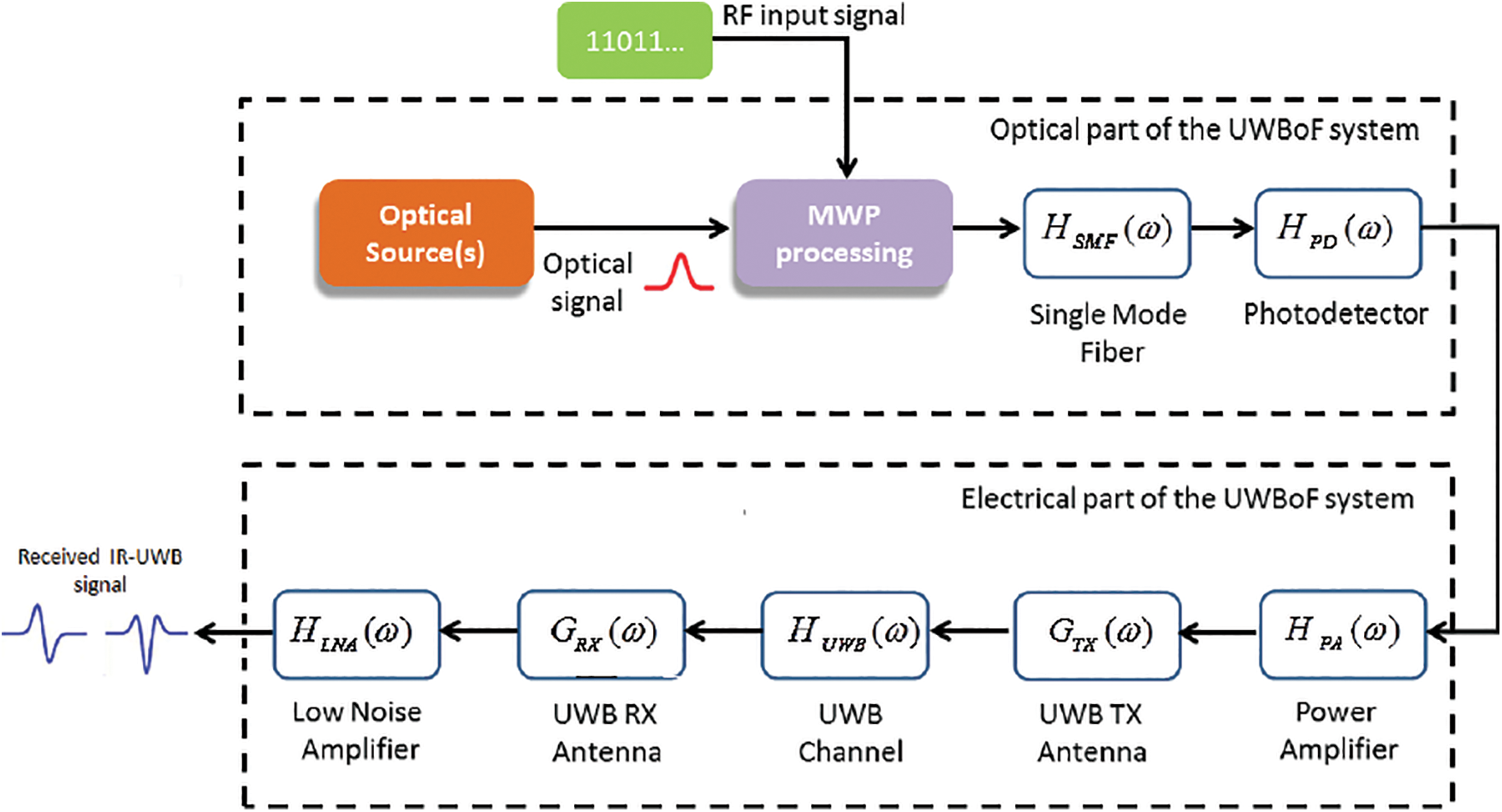
This paper presents a radio optical network simulation tool (RONST) for modeling optical-wireless systems. For a typical optical and electrical chain environment, performance should be optimized concurrently before system implementation. As a result, simulating such systems turns out to be a multidisciplinary problem. The governing equations are incompatible with co-simulation in the traditional environments of existing software (SW) packages. The ultra-wideband (UWB) technology is an ideal candidate for providing high-speed short-range access for wireless services. The limited wireless reach

Coarse spectrum sensing for LTE systems
Spectrum sensing is one of the most challenging tasks required of a cognitive radio receiver. In this paper, we consider the first stage of spectrum sensing, where it is required to perform the sensing as fast as possible and with an acceptable performance under different channel conditions. The target signal to be sensed is a Long Term Evolution (LTE) signal. We first propose sensing the whole LTE signal bandwidth using the Fast Wavelet Transform (FWT) algorithm and then compare it to the Fast Fourier Transform (FFT)-based algorithm in terms of complexity and performance. A new algorithm is
Intelligent Arabic-Based Healthcare Assistant
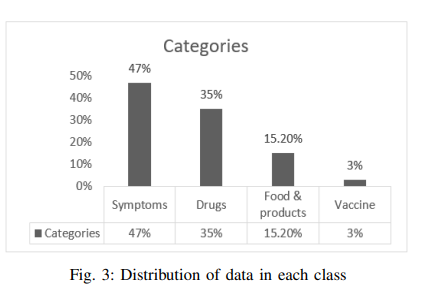
Text classification has been one of the most common natural language processing (NLP) objectives in recent years. Compared to other languages, this mission with Arabic is relatively restricted and in its early stages, and this combination in the medical application area is rare. This paper builds an Arabic health care assistant, specifically a pediatrician that supports Arabic dialects, especially Egyptian accents. The proposed application is a chatbot based on Artificial Intelligence (AI) models after experimenting with Two Bidirectional Encoder Representations from Transformers (BERT) models

Future of public organizations in the digital transformation era
Introduction and Purpose: Digital transformation has been a “buzz” word over the last few years. Government of Egypt has initiated various ambitious initiatives and projects for transforming the economy into digital economy. Since the outlook of the future organizations would be different from what we know today, therefore, such transformation mandates radical change in the way public leaders manage their organizations, operations and workforce. Consequently, there is a necessity for foreseeing the drivers of change, as well as the technological evolution, which are shaping the future
AiroDiag: A sophisticated tool that diagnoses and updates vehicles software over air
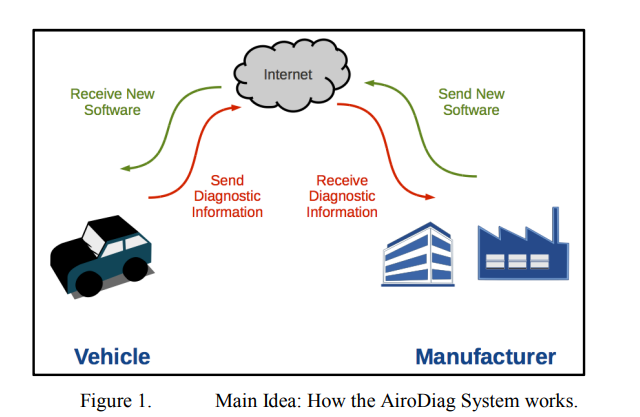
This paper introduces a novel method for diagnosing embedded systems and updating embedded software installed on the electronics control units of vehicles through the Internet using client and server units. It also presents the communication protocols between the vehicle and the manufacturer for instant fault diagnosis and software update while ensuring security for both parties. AiroDiag ensures maximum vehicle efficiency for the driver and provides the manufacturer with up-to-date vehicle performance data, allowing enhanced future software deployment and minimum loss in case of vehicle
Design and Analysis of A Reliable Quadcopter UAV for Wireless Communication Purposes
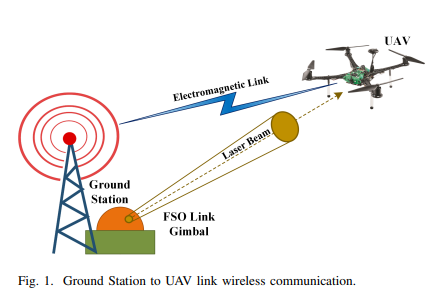
Unmanned aerial vehicles (UAVs) are used for a wide range of applications, including wireless communication systems, which have the potential to provide cost-effective wireless connectivity for a wide variety of applications. The present UAV models lack the flexibility needed to carry the mission's varied payloads. As a result, appropriate design and analysis of the UAV structure are essential. This work presents a complete design and analysis of a quadcopter UAV for wireless communications purposes, which is carried out using computer-aided design (CAD) tools and techniques. Several design

Real-Time Fish Detection Approach on Self-Built Dataset Based on YOLOv3
Creating a model to detect freely moving fish underwater in real-time is a challenging process for two main reasons. First, the available datasets suffer from some limitations that severely affect the results of the detection models operating in challenging and blurry environments. These models should be able to capture all of the fish movement given different types of surroundings. Second, choosing the convenient detection model system which matches the desired requirements from having high accuracy with satisfying frames per second (FPS). To overcome the first challenge, a new dataset was
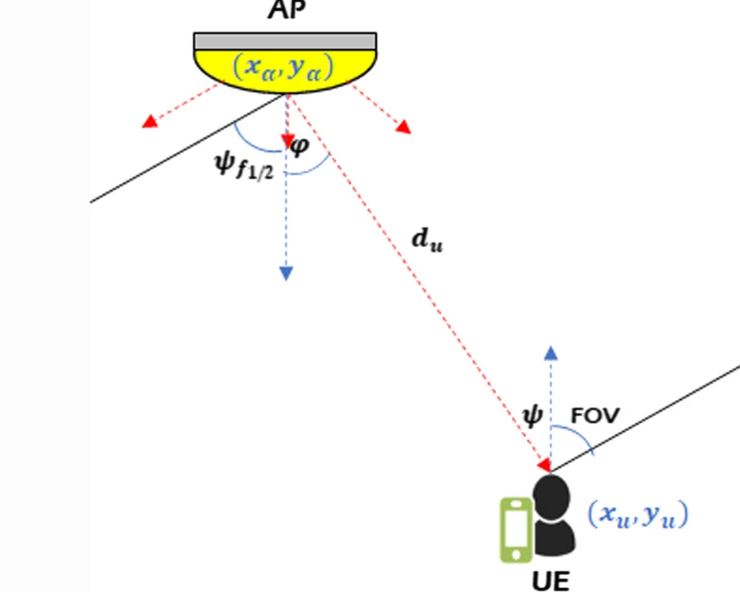
Hybrid NOMA-based ACO-FBMC/OQAM for next-generation indoor optical wireless communications using LiFi technology
Light fidelity (LiFi) has successfully achieved high data transfer rates, high security, great availability, and low interference. In this paper, we propose a LiFi system consisting of a combination of non-orthogonal multi-access (NOMA), asymmetrically-clipped optical (ACO), and filter bank multicarrier (FBMC) techniques combined with offset quadrature amplitude modulation (OQAM). The paper also applies a μ-law companding approach for a high peak to average power ratio (PAPR) reduction of the FBMC/OQAM scheme. The combination of NOMA, ACO-FBMC/OQAM, and μ-law companding allows a significant

Optimal Power Consumption on Distributed Edge Services Under Non-Uniform Traffic with Dual Threshold Sleep/Active Control
Mobile edge computing (MEC) is a key enabling technology for supporting high-speed and low latency services in the fifth generation (5G) and beyond networks. MEC paradigm moves computational resources from centralized cloud servers towards the edge of the network, nearer to the users. However, edge computation resources increase the power consumption of the network. Moreover, the non-uniform traffic load on the edge servers causes resources to be underutilized and decrease the system's power efficiency. To achieve the green networking concept encouraged in 5G and beyond networks, unused MEC
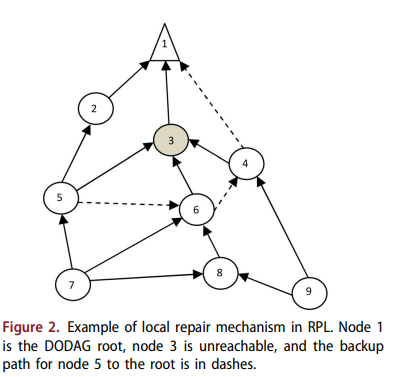
Optimal proactive monitor placement & scheduling for IoT networks
This work is fulfilled in the context of the optimized monitoring of Internet of Things (IoT) networks. IoT networks are faulty; Things are resource-constrained in terms of energy and computational capabilities; they are also connected via lossy links. For IoT systems performing a critical mission, it is crucial to ensure connectivity, availability, and network reliability, which requires proactive network monitoring. The idea is to oversee the network state and functioning of the nodes and links; to ensure the early detection of faults and decrease node-unreachability times. It is imperative