
Extraction of Phase Information from Magnitude-Only Bio-impedance Measurements Using a Modified Kramers–Kronig Transform
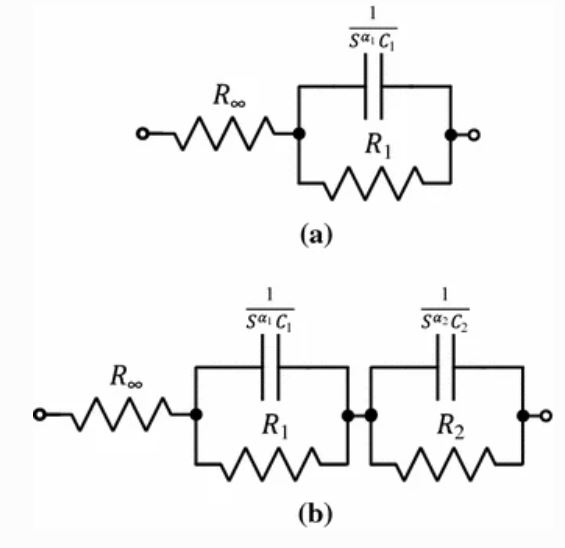
The need for portable and low-cost bio-impedance analyzers that can be deployed in field studies has significantly increased. Due to size and power constraints, reducing the hardware in these devices is crucial and most importantly is removing the need for direct phase measurement. In this paper a new magnitude-only technique based on modified Kramers–Kronig transforms is proposed and tested. Comparison with impedance measurements of fresh and aging tomato samples using a precise industry standard impedance analyzer is carried out and explained. Error and noise analysis of the proposed
Experimental comparison of integer/fractional-order electrical models of plant
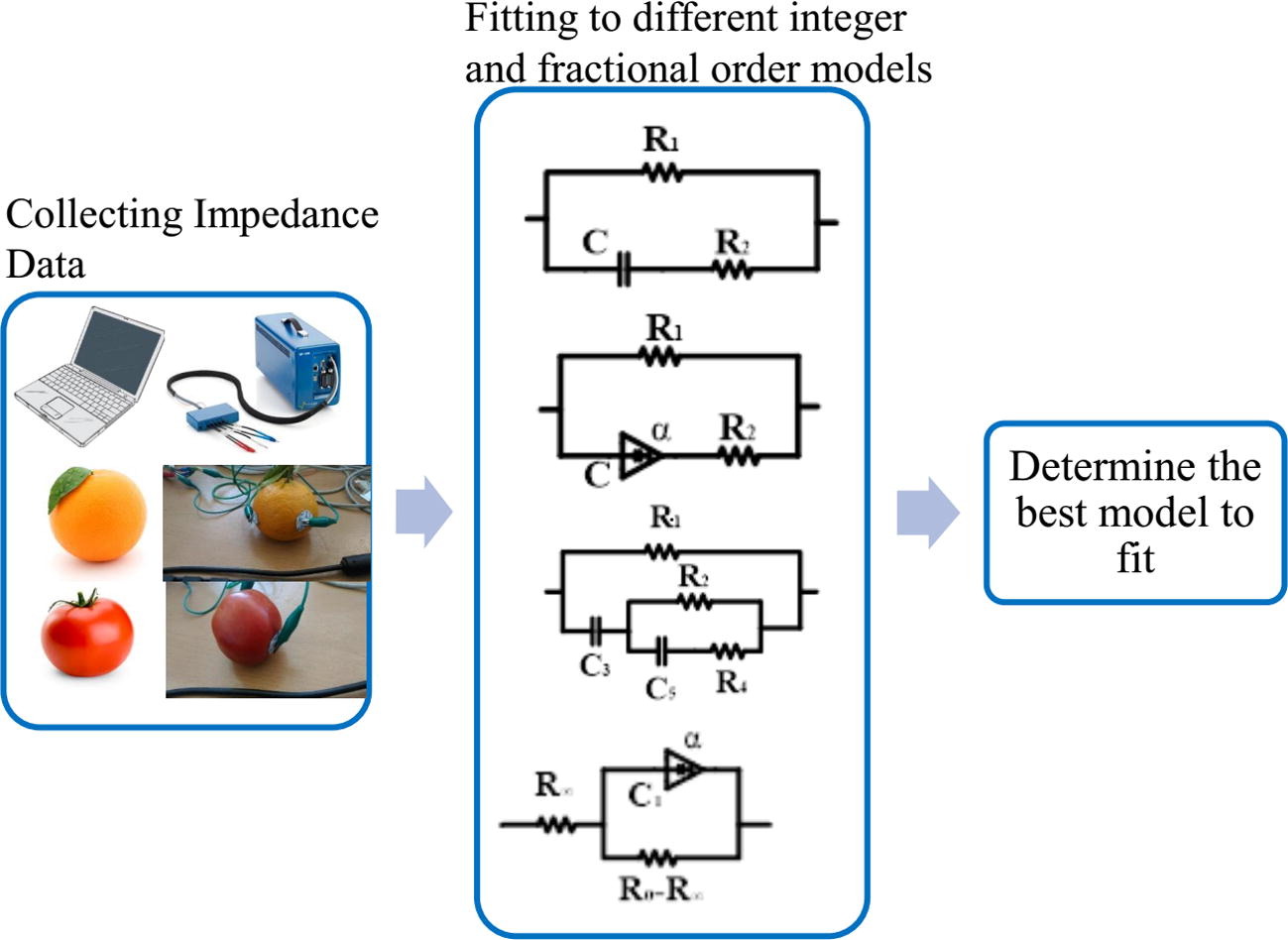
In this paper, different integer and fractional-order models are studied from electrical point of view, these models are used to fit the measured impedance data for different types of fruits and vegetables. Experimental work is done on eight different models for six types of fruits to verify the best fitting model. Electric impedance is measured in the range of frequencies (200 mHz–200 Khz) using a non-destructive method, where the tissues are not damaged by electrode insertion. Moreover, two integer order models have been extended to the fractional order domain where data analysis and fitting
Extraction of bioimpedance phase information from its magnitude using a non-uniform Kramers–Kronig transform
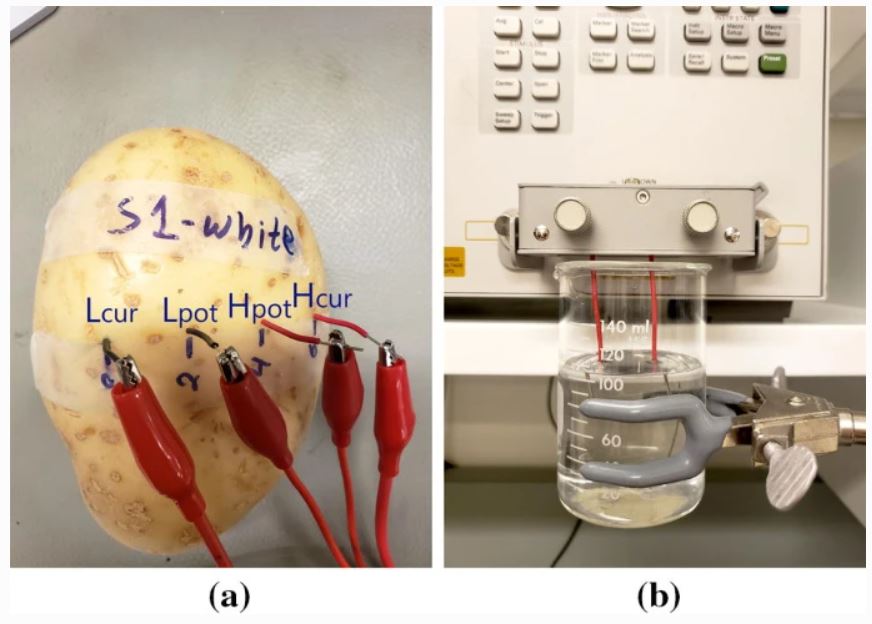
A novel non-uniform Kramers–Kronig Transform algorithm for bioimpedance phase extraction is proposed and tested in this work. The algorithm error is studied and compared with a previously proposed phase extraction technique, also based on the Kramers–Kronig transform. Results using simulated datasets and experimental datasets confirm the excellent performance of the algorithm. © 2020, European Biophysical Societies' Association.
Banana ripening and corresponding variations in bio-impedance and glucose levels
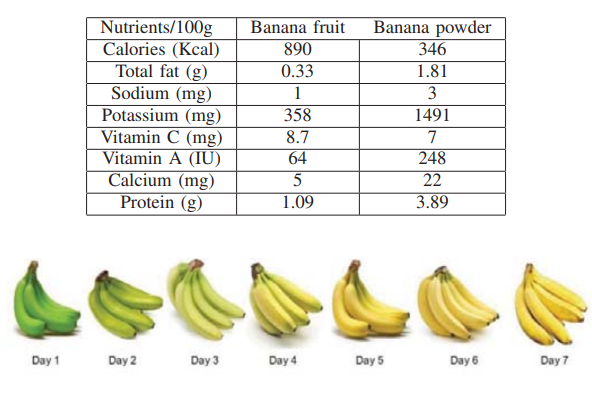
This paper studies banana fruit ripping using the Cole-impedance model fitted over the measured bio-impedance data by monitoring the changes in the model parameters during the different ripping stages. A set of twenty bananas are tested for 84 hours, and impedance measurements are done every 12 hours using an SP150 electrochemical station. The changes in model parameters are related to the physical changes in the fruit as well as with the glucose concentration, which increases with time. © 2019 IEEE.
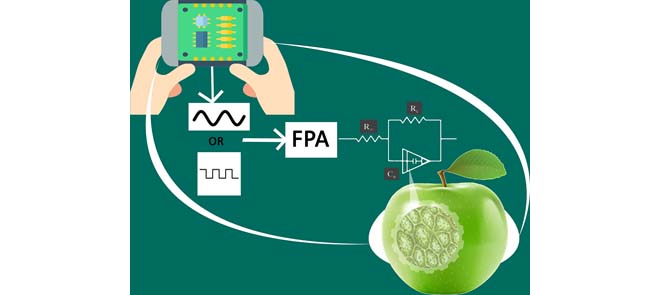
Extracting Optimized Bio-Impedance Model Parameters Using Different Topologies of Oscillators
This paper demonstrates the possibility of extracting the single-dispersion and double-dispersion Cole-bio-impedance model parameters using oscillators (sinusoidal or relaxation). The method is based on replacing selected components in the oscillator structure with the biological sample under test and then using the Flower Pollination optimization Algorithm (FPA) to solve a set of nonlinear equations in order to extract the unknown model parameters. Minimum component sinusoidal oscillators and relaxation oscillators are used in this work and experimental results on three samples of four
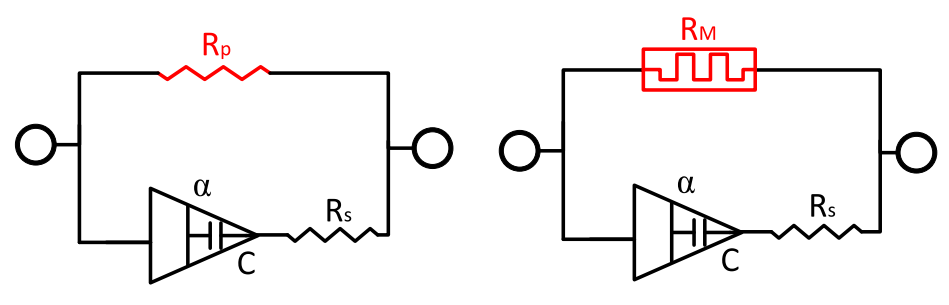
Memristive Bio-Impedance Modeling of Fruits and Vegetables
Recent works show that the plants can exhibit nonlinear memristive behavior when excited with low-frequency signals. However, in the literature, only linear bio-impedance models are extensively considered to model the electrical properties of biological tissues without acknowledging the nonlinear behavior. In this paper, we show with experiments, for the first time, the pinched hysteresis behavior in seven fruits and vegetables including tomato, orange, lemon, aubergine, and kiwi which exhibit single pinch-off point, and others such as carrot and cucumber exhibit double pinch-off points (i.e
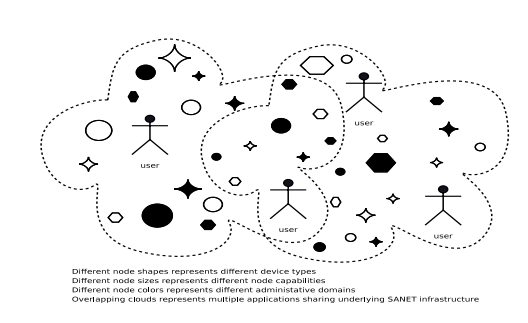
Towards evolving sensor actor networks
Sensor Actor NETworks (SANET) represent a major component of ubiquitous service environments promising interesting solutions to a wide range of problems. Despite the obvious increase in the research activities proposing architectures and protocols for SANETs, we are still no where near the production of industrial-grade SANET software that can be relied upon for mission critical applications. The cost of programming, deploying and maintaining SANET environments is still highly prohibitive due to the lack of industrial tools capable of realizing adaptive SANET software in a cost effective way
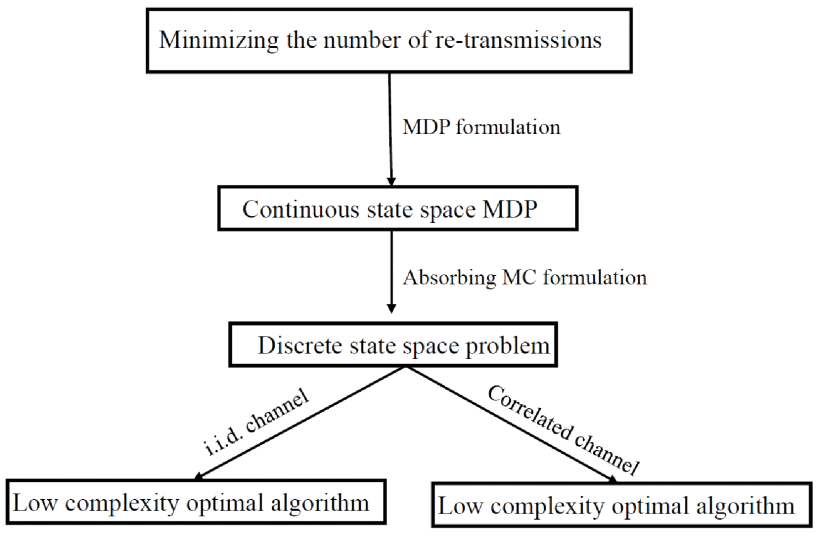
SWIPT Using Hybrid ARQ over Time Varying Channels
We consider a class of wireless powered devices employing hybrid automatic repeat request to ensure reliable end-to-end communications over a two-state time-varying channel. A receiver, with no power source, relies on the energy transferred by a simultaneous wireless information and power transfer enabled transmitter to receive and decode information. Under the two-state channel model, information is received at two different rates while it is only possible to harvest energy in one of the states. The receiver aims to decode its messages with minimum expected number of re-transmissions. Dynamic
Network Coded Cooperation Receiver with Analog XOR Mapping for Enhanced BER
In this paper, we propose a novel physical layer decoding technique for Device-to-Device Network Coded Cooperation (NCC) receivers in the Two Way Relay Channel (TWRC) scenario. The proposed technique is efficiently applicable either when Channel State Information (CSI) are available at the receiver or not. It first employs XOR arithmetic analog mapping to extract a distorted version of the intended signal from the network-coded signal received from the relay. The obtained signal is then combined with the direct signal received from the source, resulting in a higher SNR version of the intended
Multiuser MIMO relaying under quality of service constraints
We consider a wireless communication scenario with K source-destination pairs communicating through several half-duplex amplify-and-forward relays. We design the relay beamforming matrices by minimizing the total power transmitted from all the relays subject to quality of service constraints on the received signal to interference-plus-noise ratio at each destination node. We propose a novel method for solving the resulting nonconvex optimization problem in which the problem is decomposed into a group of second-order cone programs (SOCPs) parameterized by K real parameters. Grid search or