
Cooperative sensing with sequential ordered transmissions to secondary fusion center
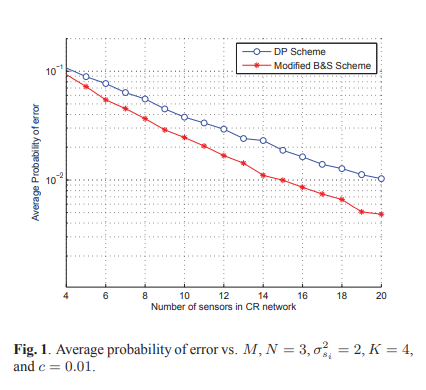
Successful spectrum sharing in a cognitive radio network depends on the correct and quick detection of primary activity. Cooperative spectrum sensing is therefore suggested to enhance the reliability of such detection. However, it renders another significant problem of increased detection delay and traffic burden. Moreover, efficient schemes for multi-sensor data fusion should be designed. In this paper, we employ sequential detection scheme together with ordered transmissions from cognitive detectors. We derive two sequential schemes, one that is capable of achieving the minimum probability
Optimal medium access protocols for cognitive radio networks
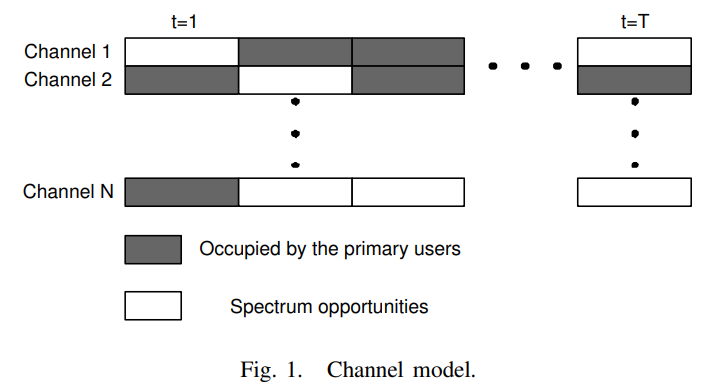
This paper focuses on the design of medium access control protocols for cognitive radio networks. The scenario in which a single cognitive user wishes to opportunistically exploit the availability of empty frequency bands within parts of the radio spectrum having multiple bands is first considered. In this scenario, the availability probability of each channel is unknown a priori to the cognitive user. Hence efficient medium access strategies must strike a balance between exploring (learning) the availability probability of the channels and exploiting the knowledge of the availability
Configurations of active acoustic metamaterial with programmable bulk modulus
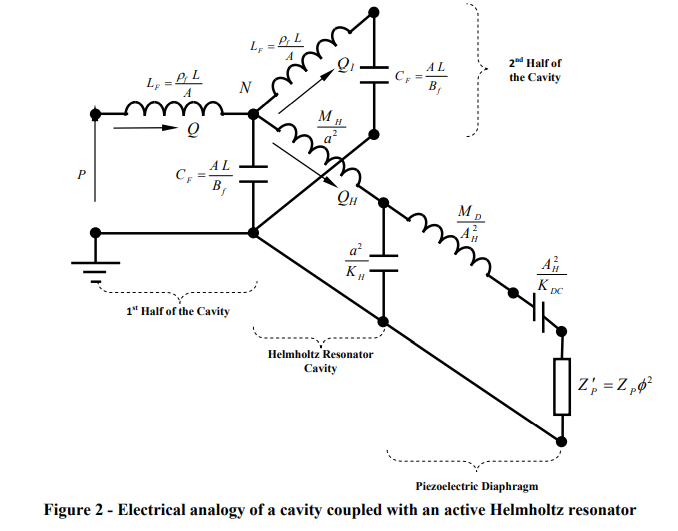
Acoustic MetaMaterials (AMM) have been considered as effective means for controlling the propagation of acoustical wave energy through these materials. However, most of the currently exerted efforts are focused on studying passive metamaterials with fixed material properties. In this paper, the emphasis is placed on the development of a new class of one-dimensional acoustic metamaterials with effective bulk moduli that are programmed to vary according to any prescribed pattern along the volume of the metamaterial. Acoustic cavities coupled with either actively controlled Helmholtz or flush
On the secrecy rate region for the interference channel
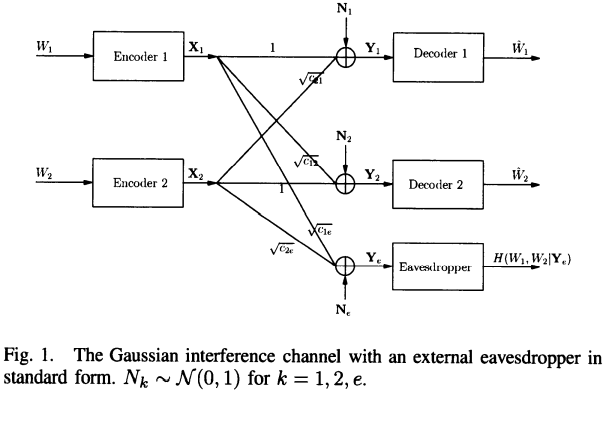
This paper studies interference channels with security constraints. The existence of an external eavesdropper in a two-user interference channel is assumed, where the network users would like to secure their messages from the external eavesdropper. The cooperative binning and channel prefixing scheme is proposed for this system model which allows users to cooperatively add randomness to the channel in order to degrade the observations of the external eavesdropper. This scheme allows users to add randomness to the channel in two ways: 1) Users cooperate in their design of the binning codebooks

On the flow anonymity problem in network coding
In this paper, we aim at protecting the privacy of the communicating parties while ensuring the authenticity of source nodes. In particular, we exploit intra-flow network coding to preserve the anonymity of communicating parties. Towards this objective, we propose an anonymity preservation scheme, namely closed group anonymity (CGA) that preserves the anonymity of the communicating parties via mixing their flows. Afterwards, we explore an instance of the Authentication-Privacy Trade-off in the context of Network Coding. We analyze the trade-off with the aid of the proposed anonymity scheme and
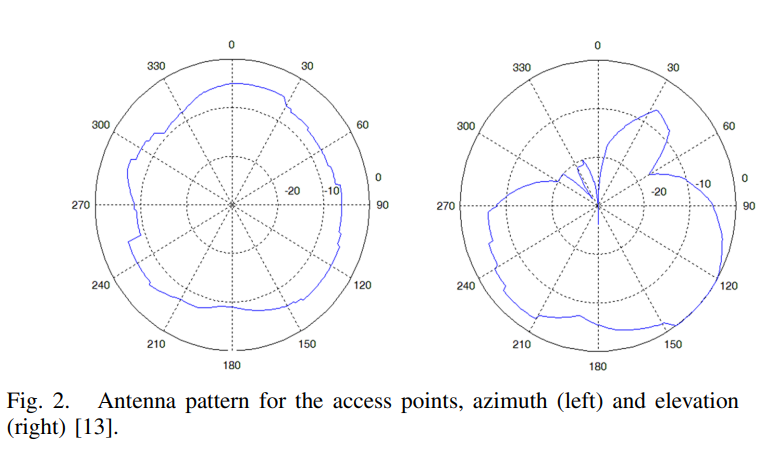
Propagation modeling for accurate indoor WLAN RSS-based localization
WLAN RSS-based localization has been a hot research topic for the last years. To obtain high accuracy in the noisy wireless channel, WLAN location determination systems usually use a calibration phase, where a radio map, capturing the signal strength signatures at different locations in the area of interest, is built. The radio map construction process takes a lot of time and effort, reducing the value of WLAN localization systems. In this paper, we propose 3D ray tracing as a way for automatically generating a highly accurate radiomap. We compare this method to previously used propagation
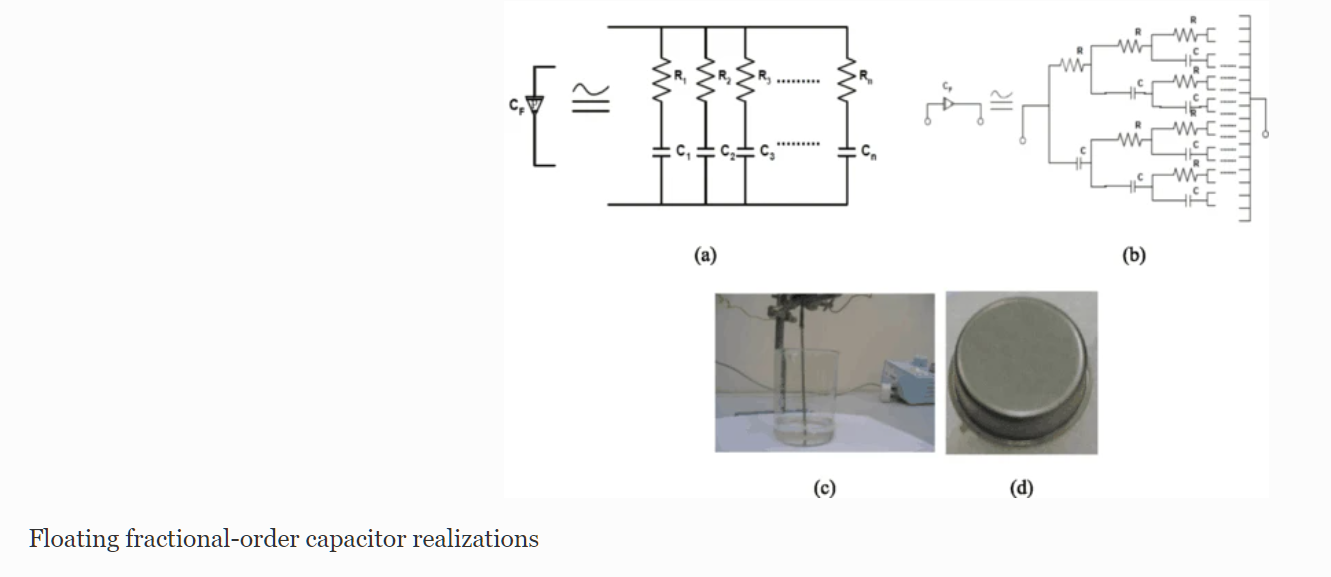
Optimization of fractional-order RLC filters
This paper introduces some generalized fundamentals for fractional-order RL β C α circuits as well as a gradient-based optimization technique in the frequency domain. One of the main advantages of the fractional-order design is that it increases the flexibility and degrees of freedom by means of the fractional parameters, which provide new fundamentals and can be used for better interpretation or best fit matching with experimental results. An analysis of the real and imaginary components, the magnitude and phase responses, and the sensitivity must be performed to obtain an optimal design
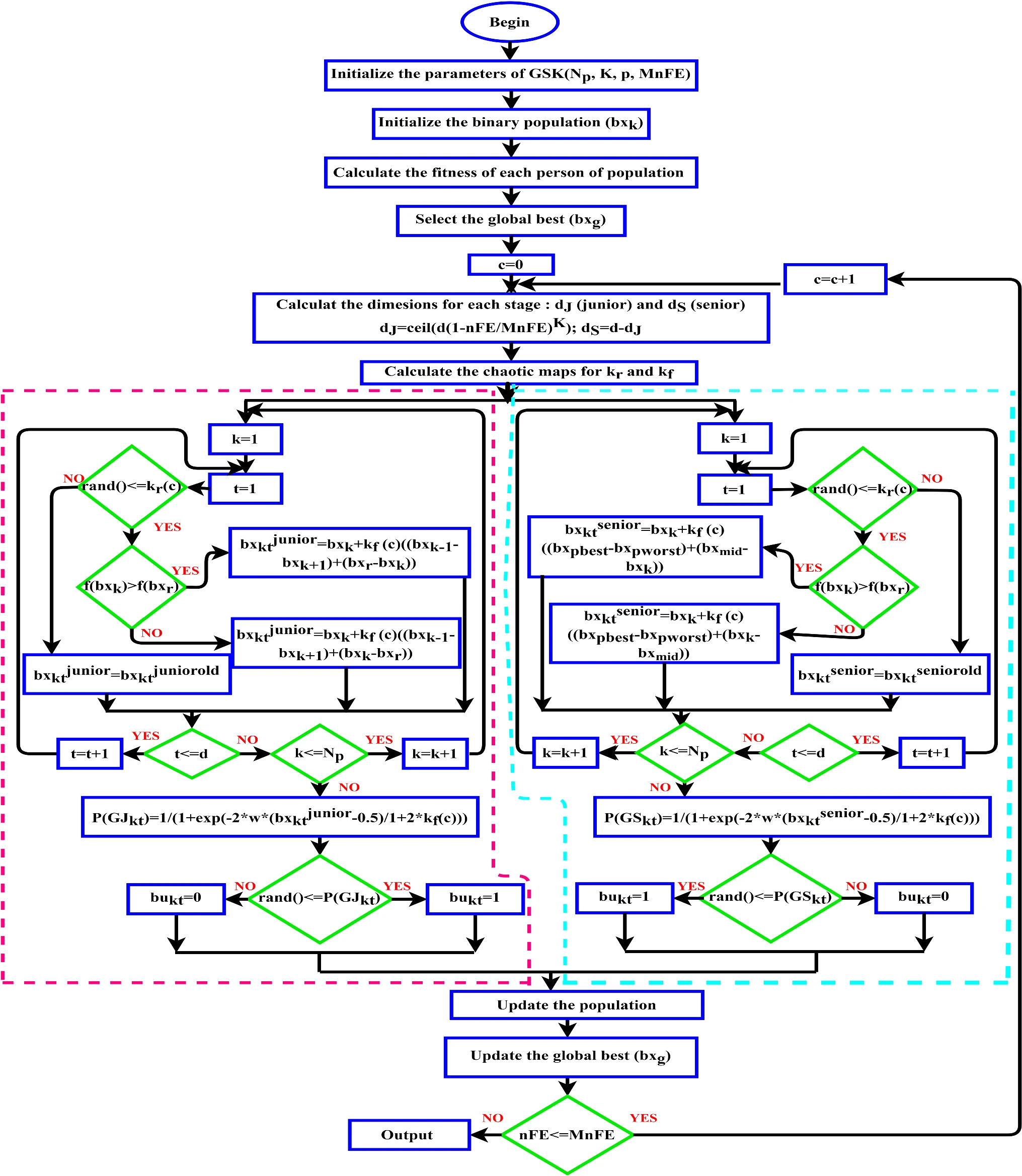
Chaotic gaining sharing knowledge-based optimization algorithm: an improved metaheuristic algorithm for feature selection
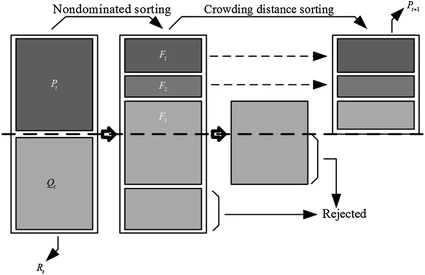
Chaotic system modelling using a neural network with optimized structure
In this work, the Artificial Neural Networks (ANN) are used to model a chaotic system. A method based on the Non-dominated Sorting Genetic Algorithm II (NSGA-II) is used to determine the best parameters of a Multilayer Perceptron (MLP) artificial neural network. Using NSGA-II, the optimal connection weights between the input layer and the hidden layer are obtained. Using NSGA-II, the connection weights between the hidden layer and the output layer are also obtained. This ensures the necessary learning to the neural network. The optimized functions by NSGA-II are the number of neurons in the
Chaotic system modelling using a neural network with optimized structure
In this work, the Artificial Neural Networks (ANN) are used to model a chaotic system. A method based on the Non-dominated Sorting Genetic Algorithm II (NSGA-II) is used to determine the best parameters of a Multilayer Perceptron (MLP) artificial neural network. Using NSGA-II, the optimal connection weights between the input layer and the hidden layer are obtained. Using NSGA-II, the connection weights between the hidden layer and the output layer are also obtained. This ensures the necessary learning to the neural network. The optimized functions by NSGA-II are the number of neurons in the