
Dynamic modelling of impact of lean policies on production levelling feasibility
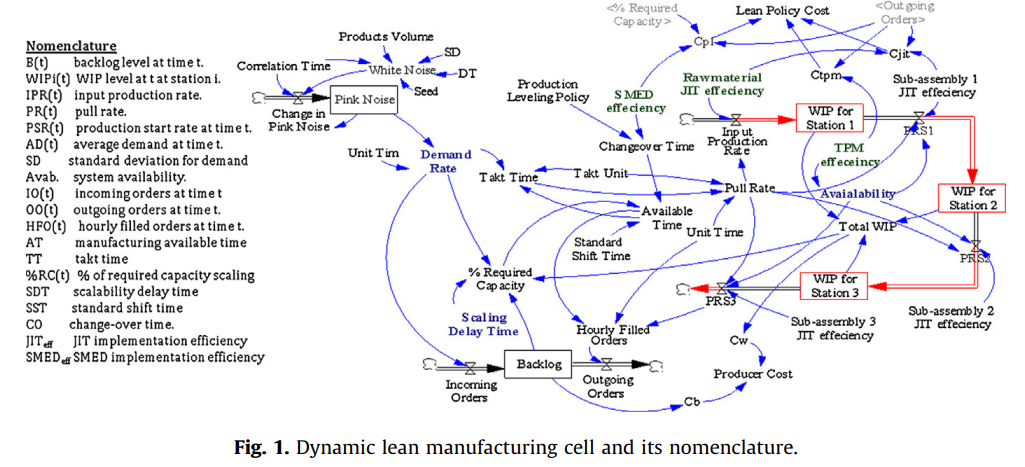
A dynamic systems approach is proposed to investigate challenges of implementing production levelling and associated costs. A model of a lean cell is developed using system dynamics. The model captures various lean tools influencing production levelling. Comparative cost analysis between various levelling implementation policies for stochastic demand with multiple products is conducted. Results showed that determining the most feasible levelling policy is highly dictated by both capacity scalability cost and limitations. The developed model and revealed insights can help lean practitioners to
Opportunistic interference alignment for multiuser cognitive radio
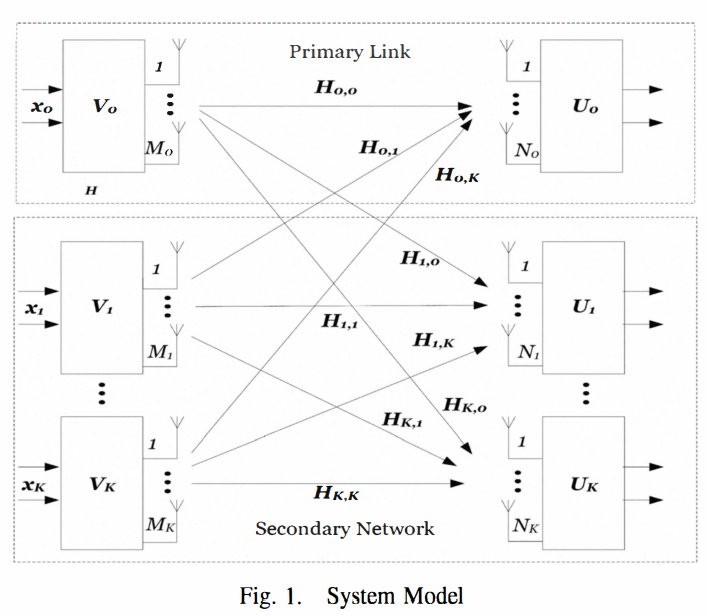
We present an interference alignment (IA) technique that allows multiple opportunistic transmitters (secondary users) to use the same frequency band of a pre-existing primary link without generating any interference. The primary and secondary transmit-receive pairs are equipped with multiple antennas. We exploit the fact that under power constraints on the primary transmitter, the rate of the primary user is maximized by water-filling on the singular values of its channel matrix leaving some eigen modes unused. The secondary users can align their transmitted signals to produce a number of
Practical provably secure communication for half-duplex radios
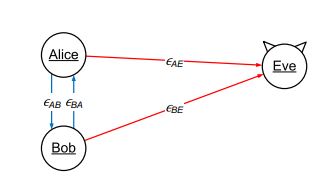
In this paper, we present a practical and provably secure two-way wireless communication scheme in the presence of a passive eavesdropper. The scheme implements a randomized scheduling and power allocation mechanism, where each legitimate node transmits in random time slots and with random transmit power. Such randomization results in ambiguity at the eavesdropper with regard to the origin of each transmitted frame. The scheme is analyzed in a time-varying binary block erasure channel model and secrecy outage probabilities are derived and empirically evaluated. The scheme is implemented over
The water-filling game in fading multiple-access channels
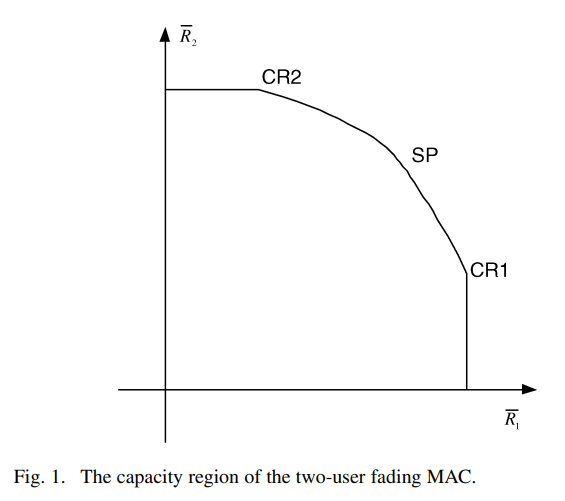
A game-theoretic framework is developed to design and analyze the resource allocation algorithms in fading multiple-access channels (MACs), where the users are assumed to be selfish, rational, and limited by average power constraints. The maximum sum-rate point on the boundary of the MAC capacity region is shown to be the unique Nash equilibrium of the corresponding water-filling game. This result sheds a new light on the opportunistic communication principle. The base station is then introduced as a player interested in maximizing a weighted sum of the individual rates. A Stackelberg
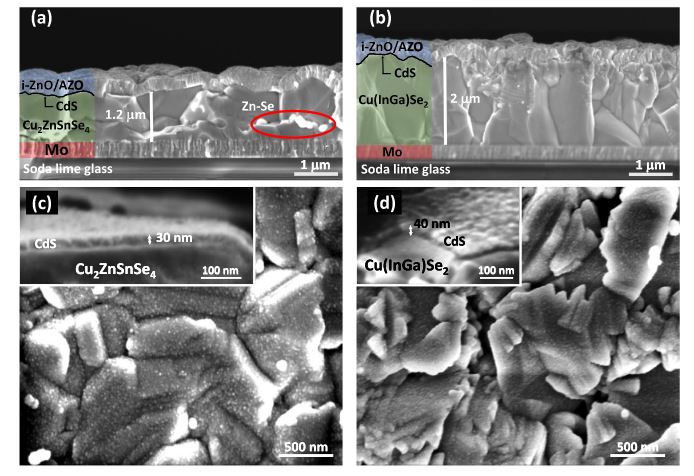
Impact of the Cd2+ treatment on the electrical properties of Cu2ZnSnSe4 and Cu(In,Ga)Se2 solar cells
Modification of the absorber surface properties by Cd2+ treatment (Cd2+ partial electrolyte) results in the following: formation of Cd(OH)2 on the absorber surface, deposition of thinner chemical bath-deposited CdS buffer layer, and a smaller space charge region. The impact on electrical performances is as follows: decrease of the series resistance (RS), increase of the fill factor, increase of the efficiency (η), and reduction of the crossover between the dark and light current density-voltage curvesThe present contribution aims at determining the impact of modifying the properties of the
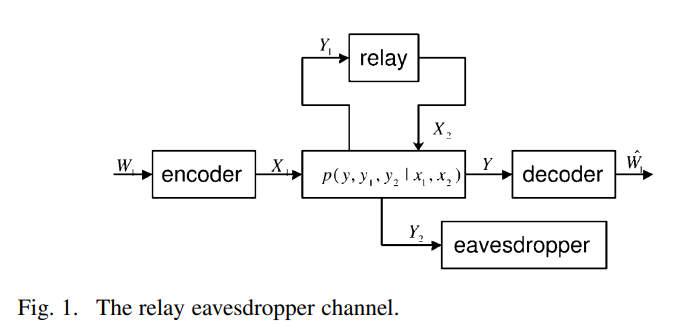
The relay-eavesdropper channel: Cooperation for secrecy
This paper establishes the utility of user cooperation in facilitating secure wireless communications. In particular, the four-terminal relay-eavesdropper channel is introduced and an outer-bound on the optimal rate-equivocation region is derived. Several cooperation strategies are then devised and the corresponding achievable rate-equivocation region are characterized. Of particular interest is the novel noise-forwarding (NF) strategy, where the relay node sends codewords independent of the source message to confuse the eavesdropper. This strategy is used to illustrate the deaf helper
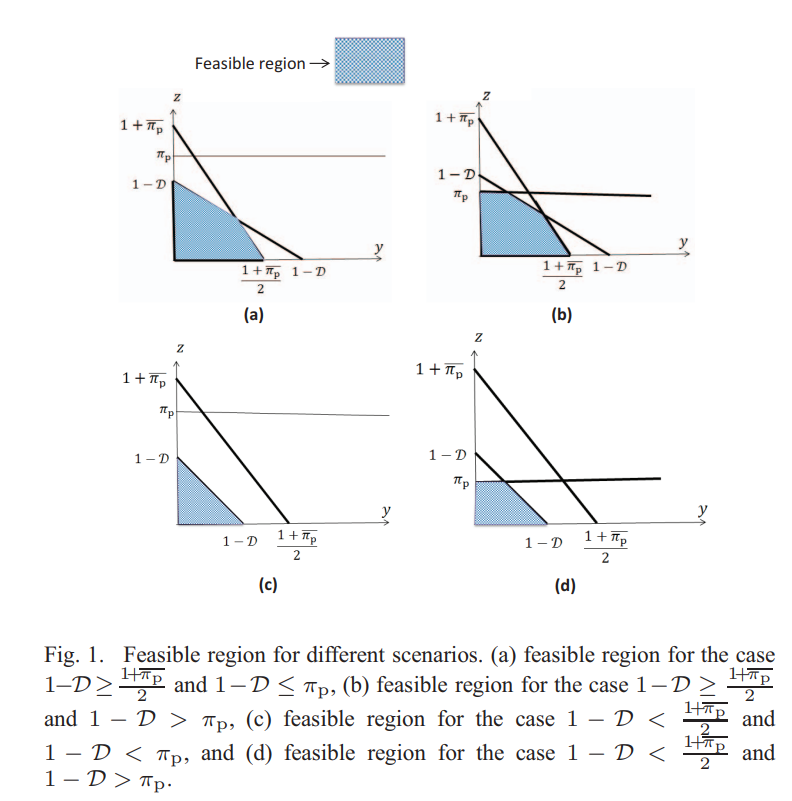
Protocol design and stability analysis of cooperative cognitive radio users
A single cognitive radio transmitter-receiver pair shares the spectrum with two primary users communicating with their respective receivers. Each primary user has a local traffic queue, whereas the cognitive user has three queues; one storing its own traffic while the other two are relaying queues used to store primary relayed packets admitted from the two primary users. A new cooperative cognitive medium access control protocol for the described network is proposed, where the cognitive user exploits the idle periods of the primary spectrum bands. Traffic arrival to each relaying queue is

The quest for user similarity in mobile societies
In this paper we explore the notion of mobile users' similarity as a key enabler of innovative applications hinging on opportunistic mobile encounters. In particular, we analyze the performance of known similarity metrics, applicable to our problem domain, as well as propose a novel temporal-based metric, in an attempt to quantify the inherently qualitative notion of similarity. Towards this objective, we first introduce generalized profile structures, beyond mere location, that aim to capture users interests and prior experiences, in the form of a probability distribution. Afterwards, we
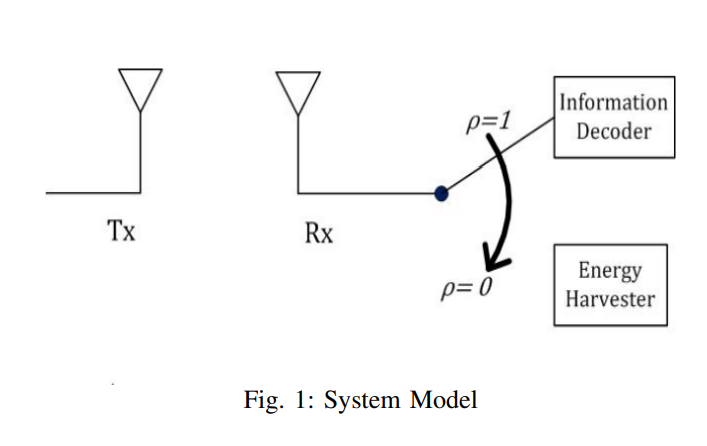
RF energy harvesting in wireless networks with HARQ
In this paper, we consider a class of wireless powered communication networks using data link layer hybrid automatic repeat request (HARQ) protocol to ensure reliable communications. In particular, we analyze the trade-off between accumulating mutual information and accumulating RF energy at the receiver of a point-to-point link using HARQ with incremental redundancy over a Rayleigh fading channel. The transmitter is assumed to have a constant energy source while the receiver relies, solely, on the RF energy harvested from the received signal. First, we target the optimal time switching (TS)