
On Optimal Dynamic Caching in Relay Networks
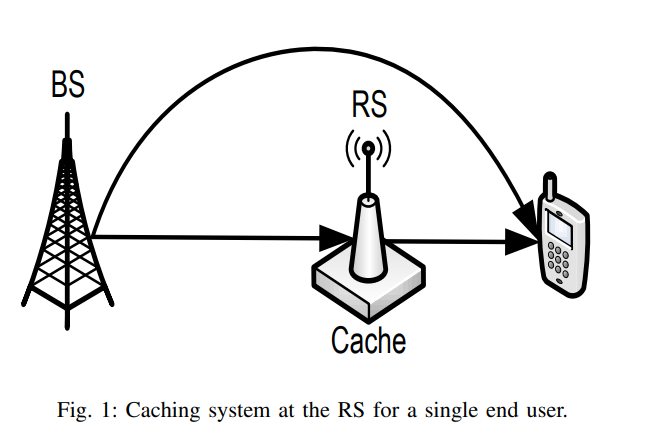
We investigate dynamic content caching in relay networks where an intermediate relay station (RS) can adaptively cache data content based on their varying popularity. With the objective of minimizing the time average cost of content delivery, we formulate and study the problem of optimal RS cache allocation when the popularities of data content are unknown apriori to the network. While optimal dynamic cache control suffers the curse of dimensionality, we develop a fundamental lower bound on the achievable cost by any caching policy. Inspired by the structure of such lower bound, we develop a
Degrees of freedom region of device-relaying cellular network
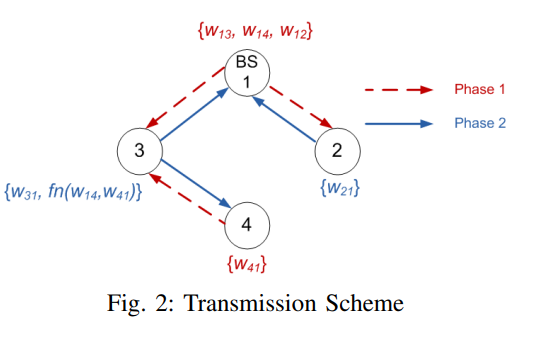
In this paper, we characterize the degrees of freedom (DoF) region of a MIMO device-relaying cellular network (DRCN) with three users and one base station (BS), where each user exchanges unicast messages with the BS. We assume that one of the users has no direct link to the BS, and hence, device-relaying is utilized to exchange data between this user and the BS, i.e., data is relayed via another user which has a direct link to the BS and a device to device (D2D) link to this user. We assume that each node operates in perfect full-duplex mode. Cut-set and genie-aided bounds are utilized to
Maximum Secondary Stable Throughput of a Cooperative Secondary Transmitter-Receiver Pair: Protocol Design and Stability Analysis
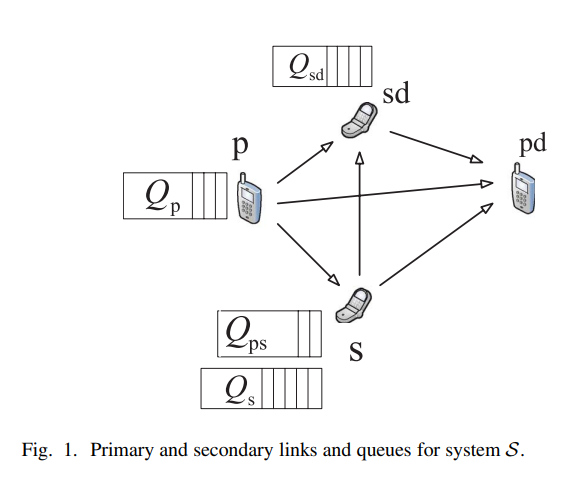
In this paper, we investigate the impact of cooperation between a secondary transmitter-receiver pair and a primary transmitter on the maximum stable throughput of the primary-secondary network. Each transmitter, either primary or secondary, has a buffer for storing its own traffic. In addition to its own buffer, the secondary transmitter has a buffer for storing a fraction of the undelivered primary packets due to channel impairments. Moreover, the secondary destination has a relaying queue (buffer) for storing a fraction of the undelivered primary packets. In our proposed cooperative system
CFD analysis of transient blood flow in a cerebral aneurysm: A comparison between a healthy and diseased model
The unsteady flow field variations between healthy and diseased three-dimensional rigid posterior cerebral artery are numerically investigated. The Computational hemodynamic simulations have been known to provide valuable clinical information to researchers and surgeons that proved to be crucial for the assessment of medical risks, pre-surgical conditioning and treatment planning. The wall shear stress (WSS) and wall pressure are the most important hemodynamic variables, and both are used to give accurate description about the health status of the artery. The results showed that at the
Phytosynthesis of Au, Ag, and Au-Ag bimetallic nanoparticles using aqueous extract of sago pondweed (Potamogeton pectinatus L.)
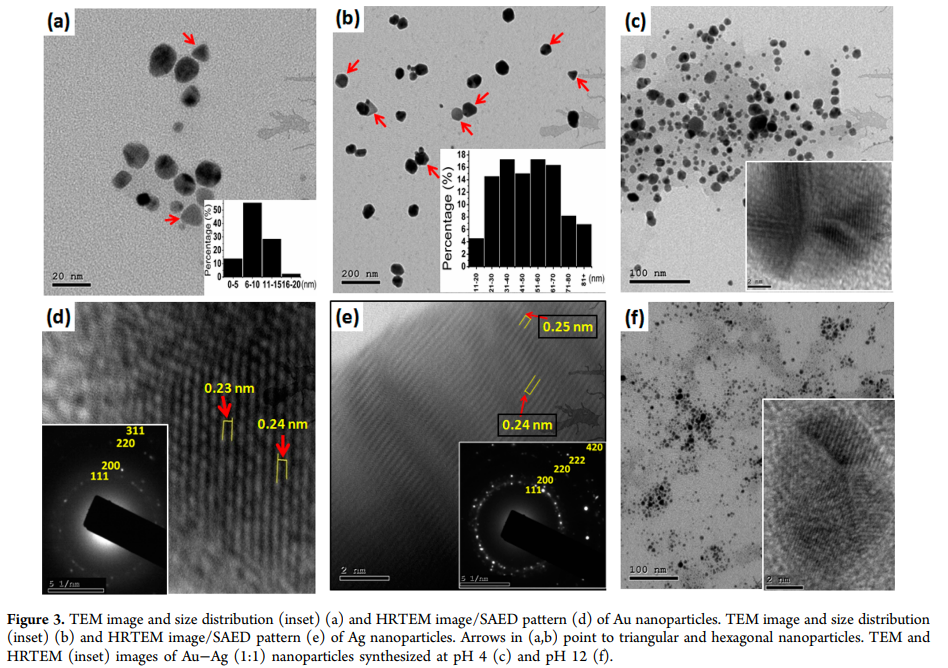
A green and facile method for the synthesis of Au, Ag, and Au-Ag bimetallic nanoparticles was developed using the aqueous extract of sago pondweed (Potamogeton pectinatus L.). Size, morphology, crystallinity, composition, capping layer, and stability of the synthesized nanoparticles were all investigated. The effect of the synthesis variables on the nanoparticles was also studied. Results showed that the synthesized nanoparticles were mostly spherical in shape, although other shapes as nanotriangles and hexagons were occasionally observed. Alloy-type Au-Ag nanoparticles could be synthesized at
Phytosynthesis of silver-reduced graphene oxide (Ag-RGO) nanocomposite with an enhanced antibacterial effect using Potamogeton pectinatus extract
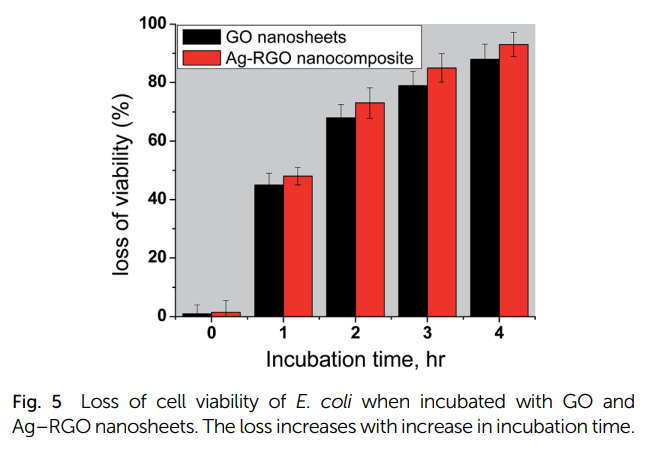
A new green synthesis method for the preparation of a silver-reduced graphene oxide (Ag-RGO) nanocomposite using Potamogeton pectinatus (Po) plant extract is introduced. The size, morphology and crystallinity of the as-prepared nanomaterials were studied with an explanation for the role of Po in the synthesis. A preliminary antibacterial experiment was developed to ensure the enhanced antibacterial effect of the Ag-RGO nanocomposite. The antibacterial measurements were done using the colony counting method. The results indicated that the majority of the silver nanoparticles "AgNPs" were formed
Discrete event simulation tool for earthmoving fleet selection
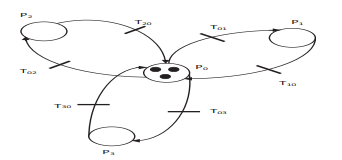
Earthmoving operations represent a sizable work in heavy civil engineering projects. Selecting optimum fleet configuration for an earthmoving operation is a very difficult process, especially when dealing with a multi loader type and multi truck type configurations. This paper presents a framework that can be used for the selection of optimum fleet for earthmoving operations. It enables the user to input the available loading and hauling equipment, then, it calculates the cost and total project time of each possible fleet combination, and finally it provides a list of the top-ten best fleet
Knowledge management in contract administration: An ontological engineering approach
Knowledge has been identified to be a significant organizational resource, which if used effectively can provide competitive advantage. Construction contract administration is a complex, knowledge-intensive process that if properly managed can mitigate the contractor's risk exposure. Challenges in proper knowledge management of contract administration are due to: 1) Large amount of fragmented information that is required to manage a construction contract, 2) Information located in heterogeneous sources (Request For Information (RFIs), site notices, schedules, contracts, etc...), 3) Information
Modeling user behavior and infrastructure level of service: An agent-based simulation approach
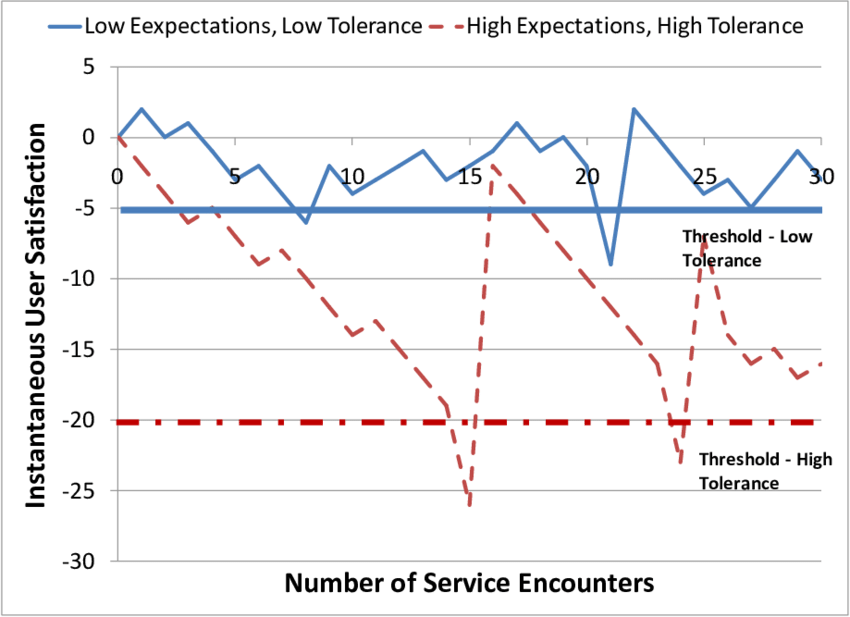
Traditional modeling frameworks used for infrastructure asset management have suffered from two main shortcomings. Most approaches have focused their modeling efforts on the infrastructure asset itself, thereby ignoring the multitude of interactions that occur between other entities. In addition, an a-priori behavior of all elements in the modeling environment has always been assumed. This paper argues that these shortcomings have significantly limited the decision-making capabilities of infrastructure asset management systems by limiting their ability to simulate emergent behavior that is
Predicting telecommunication tower costs using fuzzy subtractive clustering
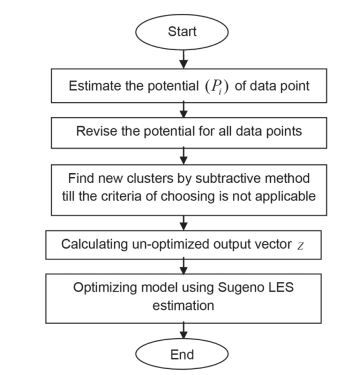
This paper presents a fuzzy subtractive modelling technique to predict the weight of telecommunication towers which is used to estimate their respective costs. This is implemented through the utilization of data from previously installed telecommunication towers considering four input parameters: a) tower height; b) allowed tilt or deflection; c) antenna subjected area loading; and d) wind load. Telecommunication towers are classified according to designated code (TIA-222-F and TIA-222-G standards) and structures type (Self-Supporting Tower (SST) and Roof Top (RT)). As such, four fuzzy