
The deterministic capacity of relay networks with relay private messages
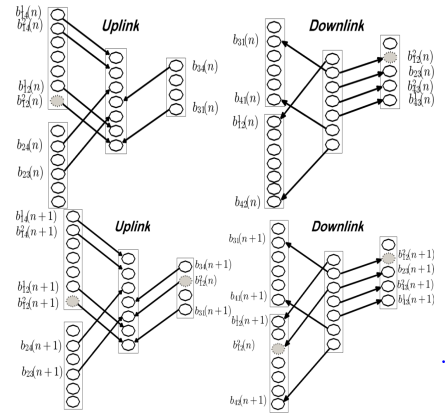
We study the capacity region of a deterministic 4-node network, where 3 nodes can only communicate via the fourth one. However, the fourth node is not merely a relay since it can exchange private messages with all other nodes. This situation resembles the case where a base station relays messages between users and delivers messages between the backbone system and the users. We assume an asymmetric scenario where the channel between any two nodes is not reciprocal. First, an upper bound on the capacity region is obtained based on the notion of single sided genie. Subsequently, we construct an
Growth dynamics of CBD-assisted CuS nanostructured thin-film: optical, dielectric and novel switchable device applications
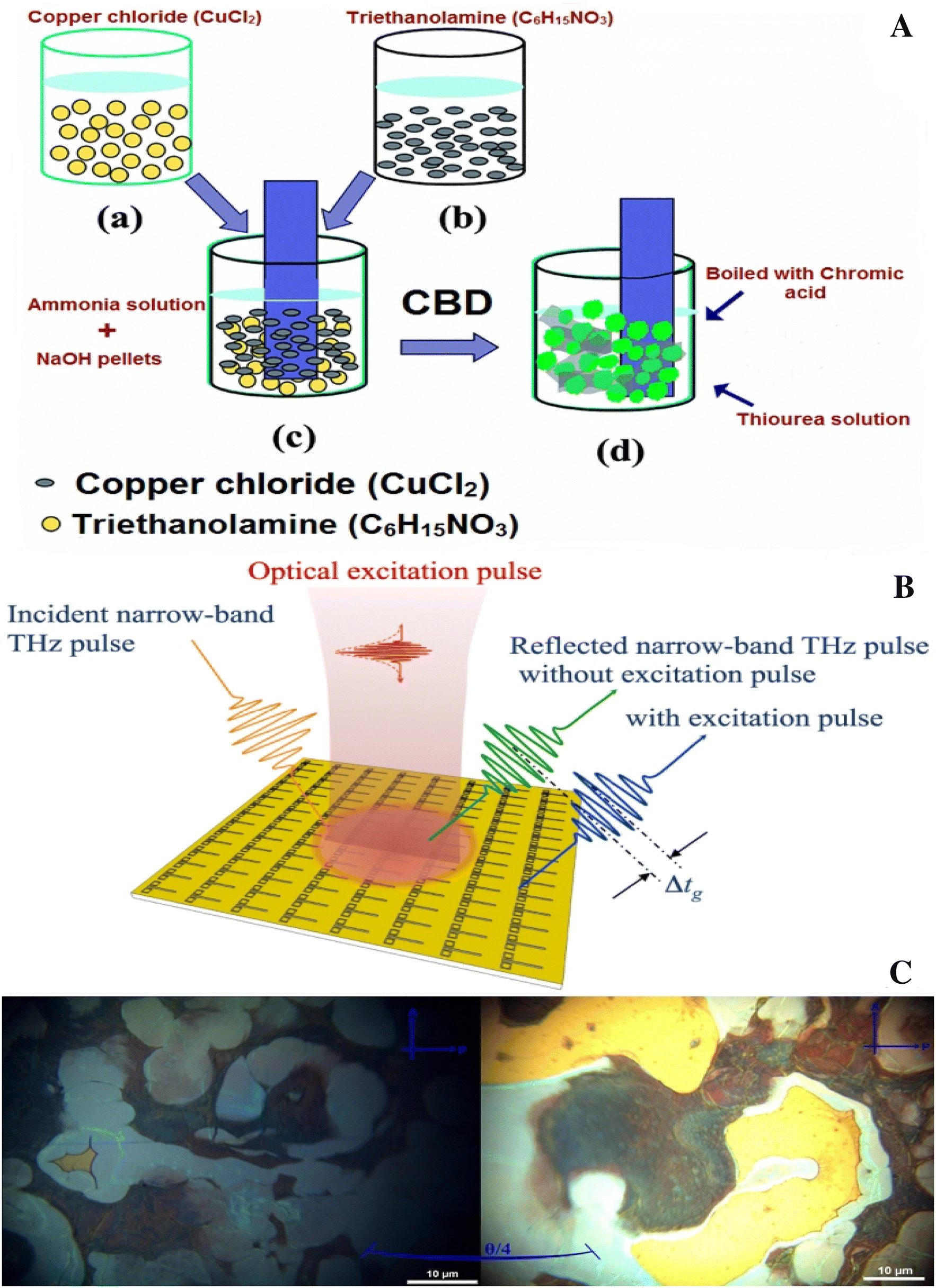
The microcrystal structure of copper sulfide (CuS) nano-structured ultra-thin film was prepared on glass substrate from aqueous ammonia solution and sodium hydroxide at 60 °C using a simple and cost-effective chemical bath deposition (CBD). The powder X-ray diffraction method was used to characterize the hexagonal structure of the prepared CuS thin-film. While, surface morphology and surface topology were investigated by scanning electron microscopy (SEM) and atomic force microscopy (AFM). The optical properties were investigated by using UV–visible absorption spectrum. The electronic
Geometrically accurate structural analysis models in BIM-centered software
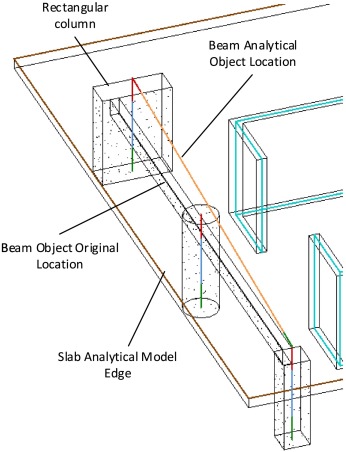
Current BIM models impose restrictions on the geometry of building members in their analytical models, where components are fitted to wireframe representations. This unnecessary reduction in geometrical representation drives the loss of structural details and may lead to defective structural analysis. The present paper addresses the current shortcomings in the semantics of analytical models within BIM environments and recommends enhancements. An explanation is given of a BIM-centered structural analysis system based on coupling finite elements for vertical and horizontal elements, and boundary
Numerical investigation of hematocrit variation effect on blood flow in an arterial segment with variable stenosis degree
Numerical simulations of blood flow in arteries are important in the understanding and diagnosis of many cardiovascular diseases, such as atherosclerosis and arterial stenosis. More realistic mathematical models representing blood rheology offer a better understanding of these diseases. In this study, blood is considered an Oldroyd-B fluid with a shear-thinning property and a shear rate-dependent relaxation time that is adopted by fitting experimental data. The Quemada model is used to represent the shear-thinning property with hematocrit variation. The stabilized finite element method is used
Further experimental evidence of the fractional-order energy equation in supercapacitors
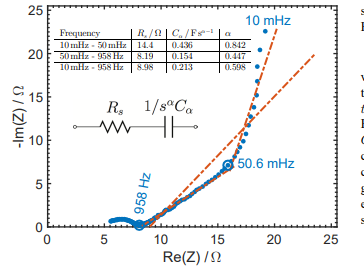
Due to the dispersive porous nature of its material, carbon–carbon supercapacitors have a current–voltage relationship which is modeled by a fractional-order differential equation of the form i(t)=Cα[Formula presented] where α≤1 is a dispersion coefficient and Cα is a pseudo-capacitance not measurable in Farads. Hence, the energy stored in a capacitor, known to equal CV2/2 where C is the capacitance in Farad and V is the voltage applied, does not apply to a supercapacitor. In a recent work (Allagui et al., 2016), a fractional-order energy equation that enables the quantification of the energy
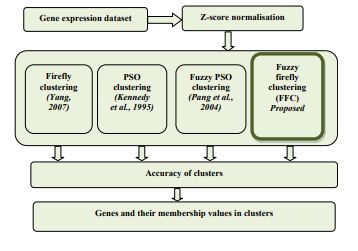
Fuzzy firefly clustering for tumour and cancer analysis
Swarm intelligence represents a meta-heuristic approach to solve a wide variety of problems. Searching for similar patterns of genes is becoming very essential to predict the expression of genes under various conditions. Firefly clustering inspired by the behaviour of fireflies helps in grouping genes that behave alike. Contrasting hard clustering methodology, fuzzy clustering assigns membership values for every gene and predicts the possibility of belonging to every cluster. To distinguish highly expressed and suppressed genes, the research in this paper proposes an efficient fuzzy-firefly
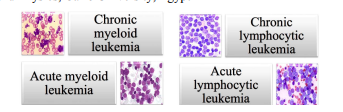
Fractional-order mathematical model for Chronic Myeloid Leukaemia
This paper is dedicated to develop a fractional order model of the rate of change of cancerous blood cells in Chronic Myeloid Leukaemia using fractional-order differential equations as well as tackling the factors that affect this rate and compare between them. The simulated cases (using MATLAB) prove that the proposed model is doable in terms of the variables positions in the equations and its effect on the overall population. Also, the effect of the Pactional order is investigated through three parameters sets and it has shown strong influence on the dynamic response. © 2017 IEEE.
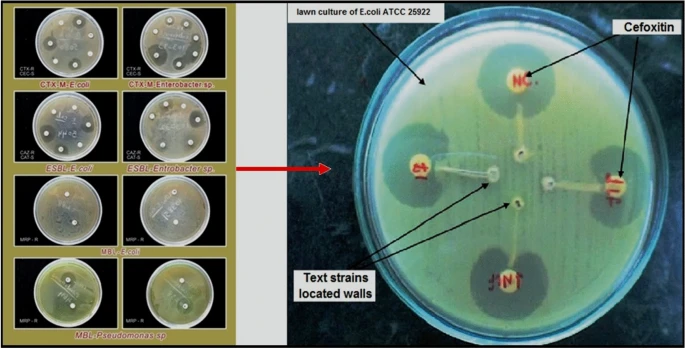
Molecular identification of extended spectrum β-lactamases (ESBLs)-producing strains in clinical specimens from Tiruchirappalli, India
Worldwide, the phenomenal antimicrobial resistance with its consequences of fatal diseases has been alerted; it is because the morbidity and mortality at a shocking rate. Therefore, there is an urgent quest of innovative antimicrobials agents; it is that communicable disease is a worldwide trouble as of the growth and wideness of drug-resistant pathogens. As for the aim of the research, it is widely investigative to the prevalence of Gram-negative pathogens of E. coli and K. pneumoniae in different age groups, gender along with the identification of ESBL-producing pathogens and antimicrobial
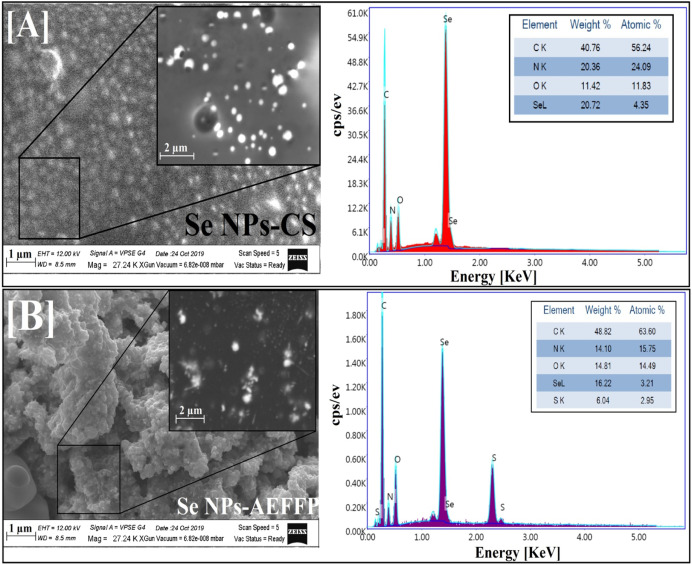
Factorial design-optimized and gamma irradiation-assisted fabrication of selenium nanoparticles by chitosan and Pleurotus ostreatus fermented fenugreek for a vigorous in vitro effect against carcinoma cells
The novelty of the present work looks in the synthesis of aqueous dispersed selenium nanoparticles (Se NPs) using gamma rays with the aid of various natural macromolecules such as citrus pectin (CP), sodium alginate (Alg), chitosan (CS) and aqueous extract of fermented fenugreek powder (AEFFP) using Pleurotus ostreatus for investigating their impact in vitro toward carcinoma cell. The synthesized Se NPs were characterized by XRD, UV–Vis., DLS, HRTEM, SEM, EDX and FTIR. Nucleation and growth mechanisms were also discussed. The factorial design was applied to examine the importance of multiple
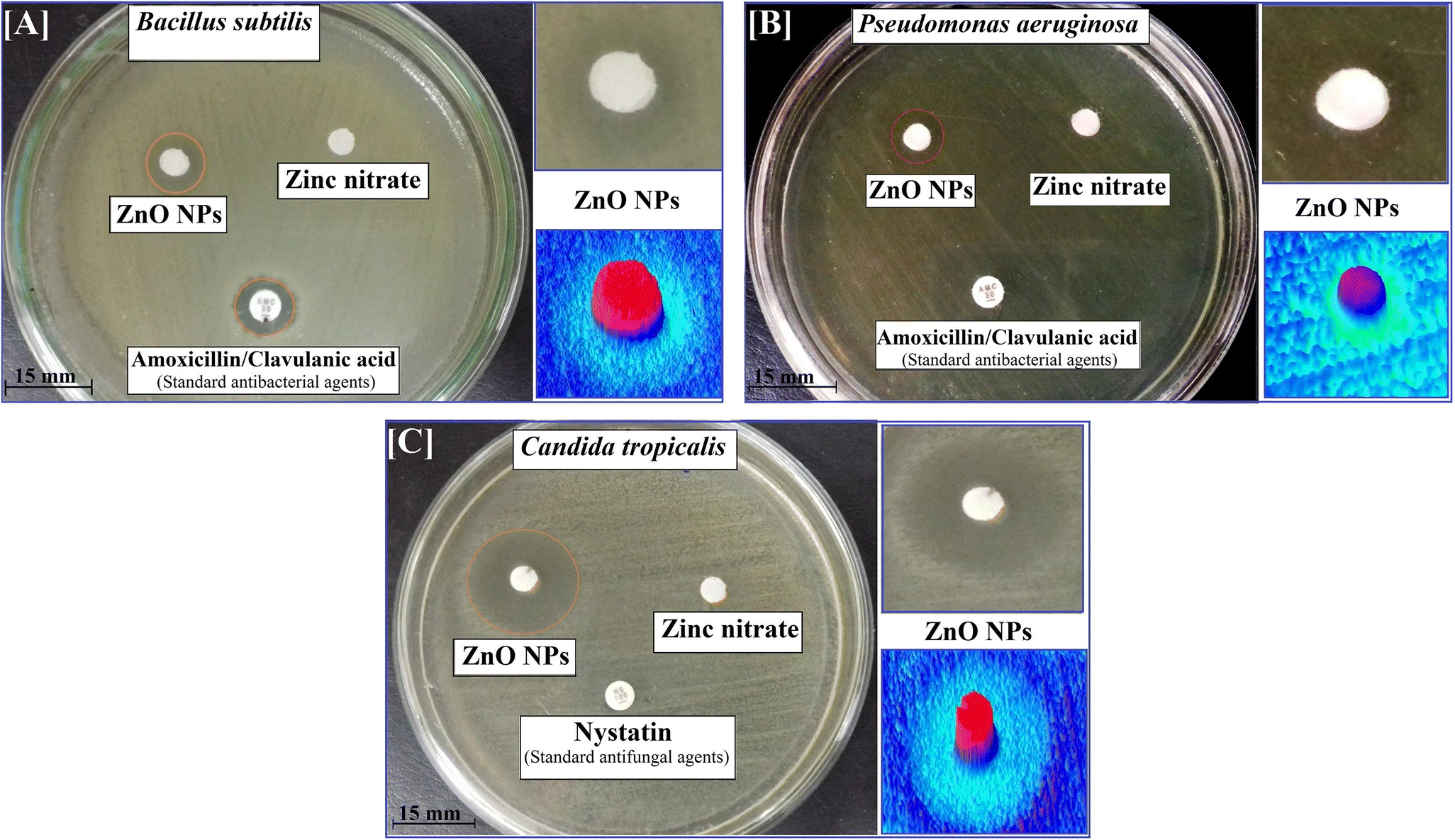
Fabrication of Ultra-Pure Anisotropic Zinc Oxide Nanoparticles via Simple and Cost-Effective Route: Implications for UTI and EAC Medications
The purposes of this work are to evaluate the antimicrobial, antibiofilm, anticancer, and antioxidant abilities of anisotropic zinc oxide nanoparticles (ZnO NPs) synthesized by a cost-effective and eco-friendly sol–gel method. The synthesized ZnO NPs were entirely characterized by UV-Vis, XRD, FTIR, HRTEM, zeta potential, SEM mapping, BET surface analyzer, and EDX elemental analysis. Antimicrobial and antibiofilm activities of ZnO NPs were investigated against multidrug-resistant (MDR) bacteria and yeast causing serious diseases like urinary tract infection (UTI). The anticancer activity was