

Optimal random access for a cognitive radio terminal with energy harvesting capability
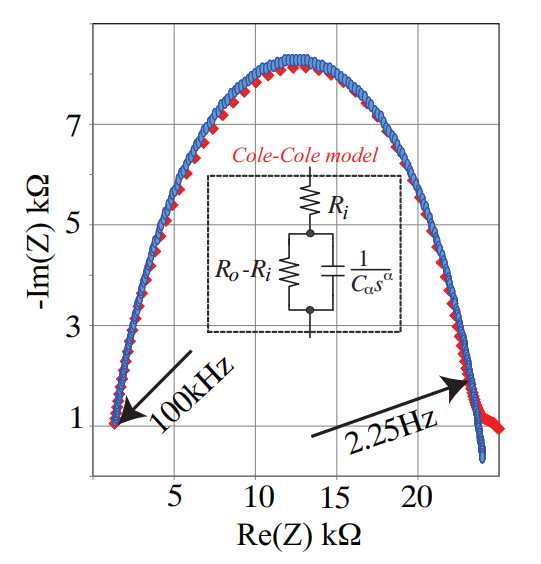
Cole-Cole Bio-Impedance Parameters Extraction from a Single Time-Domain Measurement
We show that the four parameters of a single-dispersion Cole-Cole bio-impedance model can be extracted from an one time-domain measurement with a fixed frequency. In particular, a periodic triangle waveform current excitation signal is injected into the biological sample under study while measuring the voltage developed across this sample in a galvanostatic measurement setup. The voltage response due to this triangle-wave excitation is firstly analytically derived in closed form. After that the Flower Pollination optimization Algorithm (FPA) is applied to extract the unknown model parameters
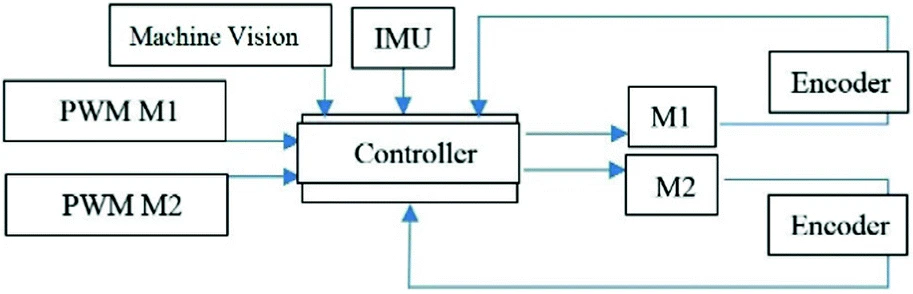
Agricultural Service Mobile Robot Modeling and Control Using Artificial Fuzzy Logic and Machine Vision
This paper represents modeling and control of an agricultural service skid steering mobile robot for the purposes of grass cutting using Proportional-Integral-Derivative (PID) controller and Fuzzy Logic techniques and feedback signals from sensors as IMU, encoders, and Machine Vision. The paper deals with the system modeling into two methods: The first is using Fuzzy modeling as a modeling tool for complex nonlinear system, the second is using MATLAB software system Identification Tool. The study Uses PID, Fuzzy logic controller and fuzzy self-tuning of PID controller to control the path
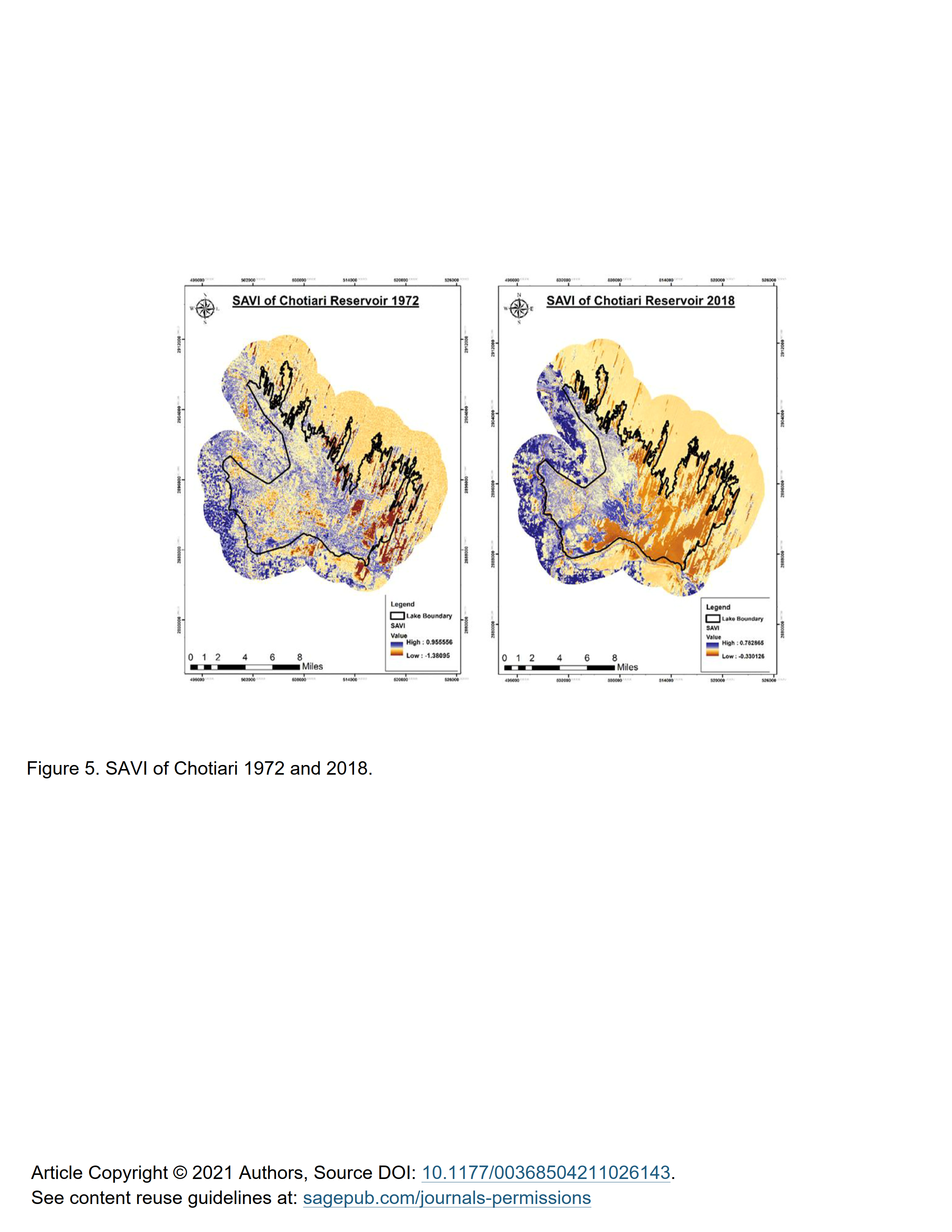
Geospatial analysis of wetlands based on land use/land cover dynamics using remote sensing and GIS in Sindh, Pakistan
In this study, the Land Use/Land Cover (LULC) change has been observed in wetlands comprises of Manchar Lake, Keenjhar Lake, and Chotiari Reservoir in Pakistan over the last four decades from 1972 to 2020. Each wetland has been categorized into four LULC classes; water, natural vegetation, agriculture land, and dry land. Multitemporal Landsat satellite data including; Multi-Spectral Scanner (MSS), Thematic Mapper (TM), and Operational Land Imager (OLI) images were used for LULC changes evaluation. The Supervised Maximum-likelihood classifier method is used to acquire satellite imagery for
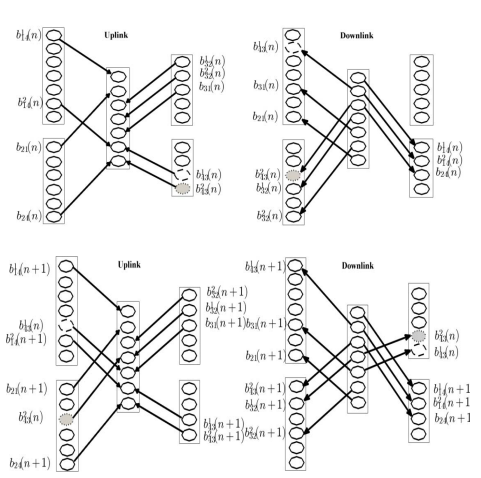
The deterministic multicast capacity of 4-node relay networks
In this paper, we completely characterize the deterministic capacity region of a four-node relay network with no direct links between the nodes, where each node communicates with the three other nodes via a relay. Towards this end, we develop an upper bound on the deterministic capacity region, based on the notion of a one-sided genie. To establish achievability, we use the detour schemes that achieve the upper bound by routing specific bits via indirect paths instead of sending them directly. © 2013 IEEE.

Evaluation of Different Sudan Dyes in Egyptian Food Samples Utilizing Liquid Chromatography/Tandem Mass Spectrometry
A sensitive and a precise method was developed for the quantification of different Sudan dyes in some Egyptian food samples. They were analyzed utilizing two-fragment ion transition under multiple reaction monitoring (MRM) mode. Separation was carried out on Kinetex 2.6u C18 100 A (75 mm × 4.6 mm) phenomenex using isocratic elution with 10:90% water and acetonitrile containing 2.0 mmol/L ammonium formate and 0.2% formic acid. The validation parameters were obtained and verified. The linearity was 0.2–10.0 ng/mL with r2 > 0.9975. LOD and LOQ were 0.06 and 0.19 ng/mL, respectively, for Sudan (I

Cold flow numerical simulation inside local pottery furnace for different designs for the air inlet
One of the many pleasures of living in Egypt is having the opportunity to visit places like a village called Tunis in El-Fayoum governorate which is a touristic village and export art and handicraft such as Pottery for 3-4 decades. The clay processing in the traditional pottery industry contains several stages. The process and quality of the pottery have to be improved to reduce pollution and the manufacturing round time which could be done through improving the heating process. Towards this goal, turbulent three-dimensional numerical simulations for the in-use air inlet and a modified design
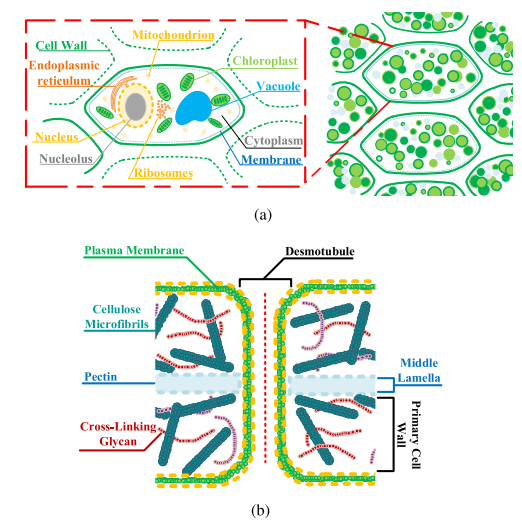
Cole bio-impedance model variations in daucus carota sativus under heating and freezing conditions
This paper reports on the variations in the parameters of the single dispersion Cole bio-impedance model of Daucus Carota Sativus (carrots) under heating and freezing conditions. Experiments are conducted on six samples with recorded live bio-impedance spectra versus temperature. The Cole model parameters are extracted from the measured data using the Flower Pollination Algorithm (FPA) optimization technique and their variations are correlated with well-known bio-chemical and bio-mechanical variations. This represents a non-invasive method for characterizing and measuring the degree of change
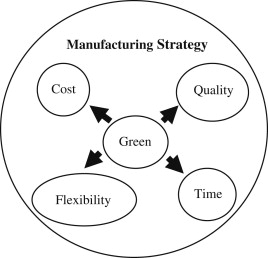
A system model for green manufacturing
Manufacturing systems evolution is afunction in multiple external and internal factors. With today's global awareness of environmental risks as well as the pressing needs to compete through efficiency, manufacturing systems are evolving into a new paradigm. This paper presents a system model for the new green manufacturing paradigm. The model captures various planning activities to migrate from a less green into a greener and more eco-efficient manufacturing. The various planning stages are accompanied by the required control metrics as well as various green tools in an open mixed architecture
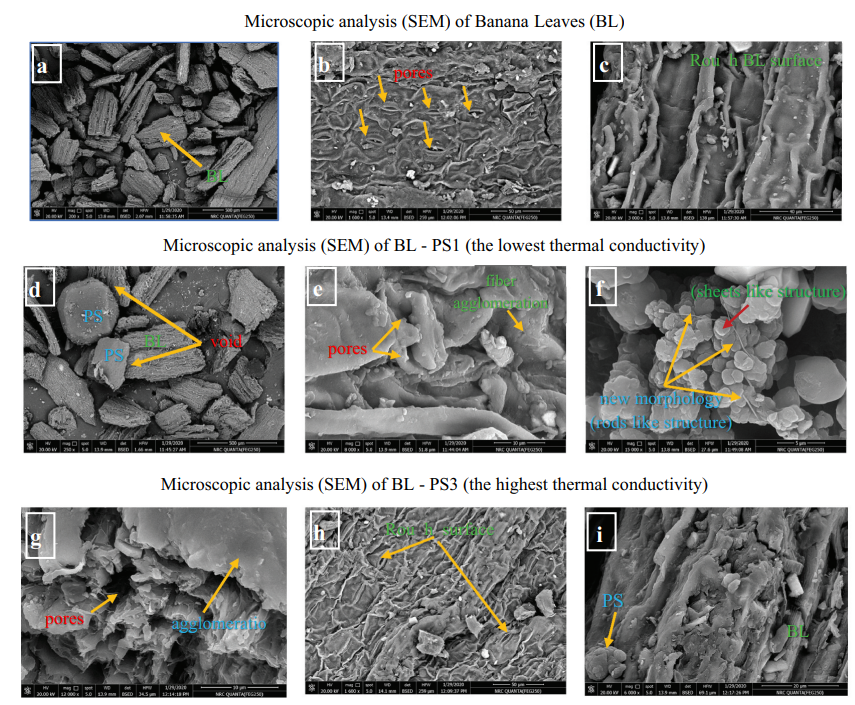
Bio-composite Thermal Insulation Materials Based on Banana Leaves Fibers and Polystyrene: Physical and Thermal Performance
Thermal insulators have a crucial role in reducing the operational building energy. They are commonly fabricated from petrochemical materials that mostly cause negative environmental impacts. This study aims to develop banana leaves-polystyrene composites (BL-PS) as a sustainable and low-cost thermal insulator. The BL powder was mixed with PS in different weight ratios (90:10, 80:20, 70:30, and 60:40). Thermal conductivity, electrical conductivity, SEM, XRD, FTIR, TGA, and DSC were carried out on BL and BL-PS composites that were prepared with 10 wt.% of PS powder (BL-PS1) and 30 wt.% of PS