
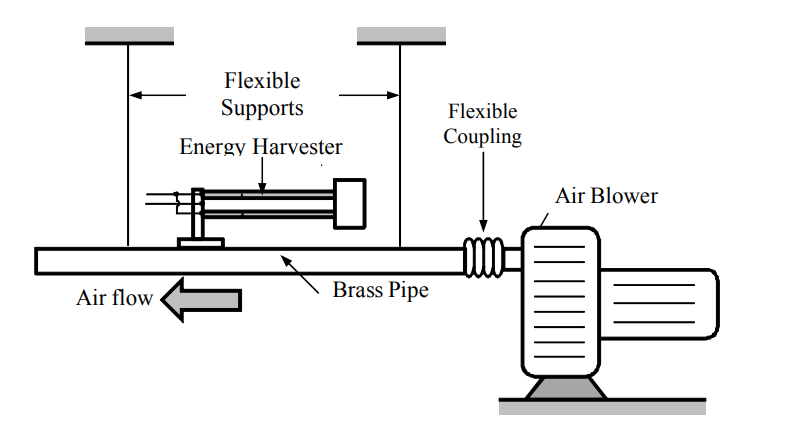
Energy harvesting of gas pipeline vibration
Pipelines conveying gas under pressure exhibit turbulence-induced vibrations. The current work is concerned with extracting useful power from pipelines operating well within their stability region. At such regions, the pipe vibrations exist in small magnitudes and are unlikely to cause structural failure, yet can be exploited to provide useful energy for low-power electronic devices. Accordingly, emphasis in the present work is placed on the development of an energy harvesting technique employing the omnipresent and inevitable flow-induced vibrations in gas pipelines. © 2010 SPIE.
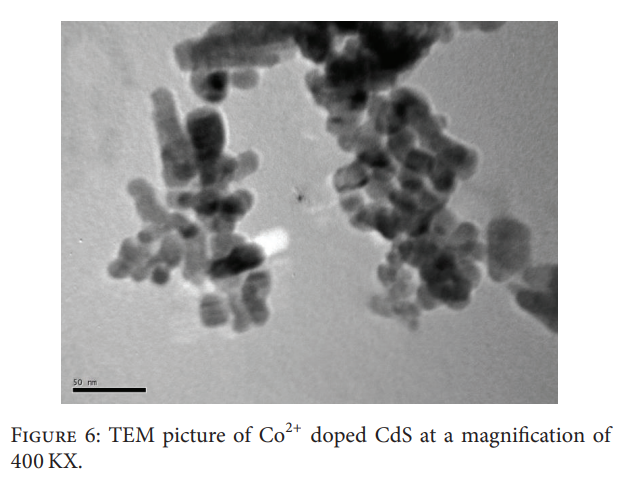
One-step thermolysis synthesis of divalent transition metal ions monodoped and tridoped CdS and ZnS luminescent nanomaterials
Mn2+, Co2+, or Ni2+ monodoped CdS (or ZnS) and Mn2+-Co2+-Ni2+ tridoped CdS (or ZnS) have been successfully synthesized by novel one-step thermolysis method using thiourea as a sulphur source. The synthesized nanomaterials were characterized by X-ray diffraction (XRD), transmission electron microscopy (TEM), and scanning electron microscopy (SEM). It is found that the average diameter and morphology of the synthesized samples varied with the nature of dopant ion. The successful doping of Mn2+-Co2+-Ni2+ tridoped ions into the host CdS (or ZnS) was proved by the EDX spectra. The luminescence of
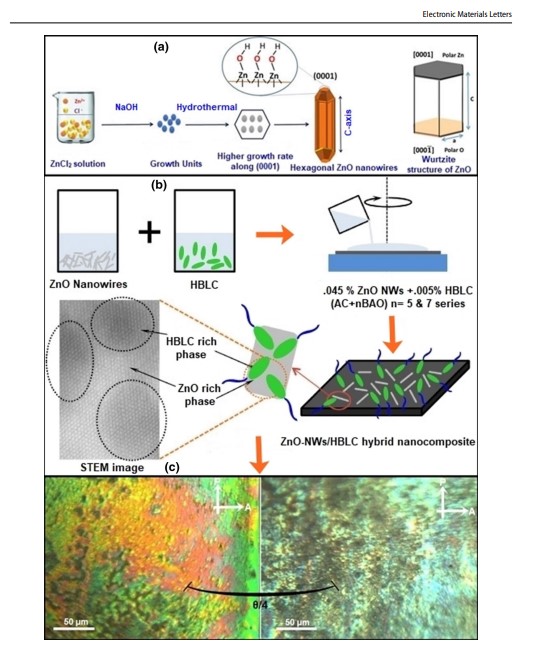
Soft, Self-Assembly Liquid Crystalline Nanocomposite for Superior Switching
Abstract: Liquid crystal (LC) has long been a feature in Materials Science and Nanotechnology, have recently been extended into the appealing domain of complex hybrid materials. The crystalline structural effects of alkoxy chain lengths and the mesogen properties of hydrogen-bonded (n-OBASA) complexes (n = 5,6,7) have been investigated in recent studies. The LC-based hybrid nanocomposite materials–obtained by the homogeneous dispersion of zinc oxide nanowires (ZnO NWs) as a dopant into hydrogen-bonded liquid-crystalline compounds—seem to be particularly promising in this article. Optimizing
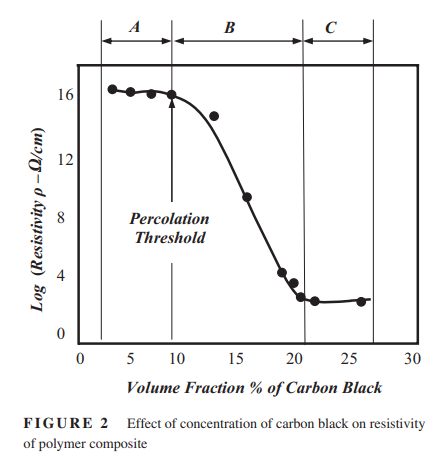
Dynamic behavior and damping characteristics of carbon black polymer composites at high strain rates
The dynamic stress–strain behavior and the damping characteristics of carbon black (CB)/polymer composites at high strain rates are measured using the split Hopkinson pressure bar. These characteristics are determined for polyurethane impregnated with 20% CB nanoparticles and compared with those of pristine polyurethane at strain rates ranging between 2,400 and 7,000 s−1. The obtained results indicate that the CB/polymer composites exhibit highly hysteretic stress–strain characteristics and have high storage modulus as well as high loss factor as compared to pristine polyurethane polymers
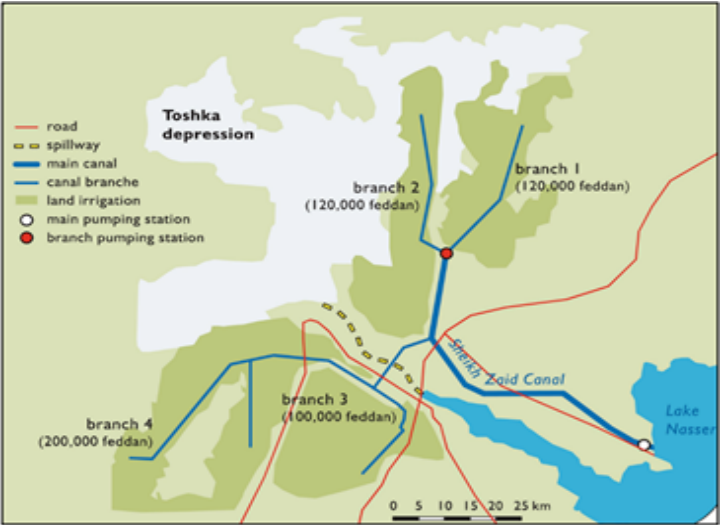
Effect of covering irrigation channels on total dissolved solids and total suspended solids
The increase in the evaporation rate is one of the crucial effects of climate change. Water losses due to evaporation are considered as an important challenge that faces the agriculture sector considering the recent water crisis in Egypt. So, covering irrigation canals with the aim to decrease evaporation could be a good solution for this problem, especially if the coverage is expected to be used for power production by covering these canals with solar panels. However, the main concern is the effect of the covering on the quality of water. So, this research study investigates the effect of
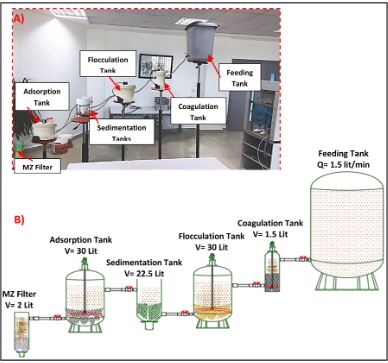
Hybrid treatment system for real textile wastewater remediation based on coagulation/flocculation, adsorption and filtration processes: Performance and economic evaluation
This research investigates the feasibility of using hybrid treatment system based on coagulation/flocculation, adsorption and filtration processes for real textile wastewater treatment. Ferric Chloride (FeCl3) was used as a coagulant, Nano Zero-Valent Iron (nZVI) as adsorbent and Micro Zeolite (MZ) as filter media for the removal of chemical oxygen demand (COD), total suspended solids (TSS), color, total nitrogen (TN) and turbidity from raw textile effluents. Batch and continuous feed scaling-up studies (full design and set-up studies) were conducted to evaluate the performance of the
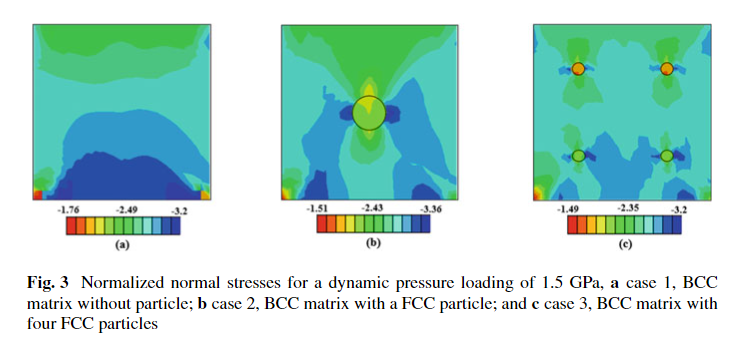
A 3D Multiple-Slip Crystal-Plasticity Model for Precipitate Hardening in Additively Manufactured High Strength Steels
Additive Manufacturing (AM) revolutionized the manufacturing of complex geometry products, especially in medical and aerospace fields. High-strength precipitate hardened (PH) stainless steels provide unique properties in term of strength and corrosion resistance for critical applications in both fields. In the current study, a 3D multiple-slip crystal-plasticity dislocation densities-based model is used to study the effect of copper precipitate hardening in high-strength stainless steels. The proposed approach accurately predicts the complex structure of martensite and properly represents the
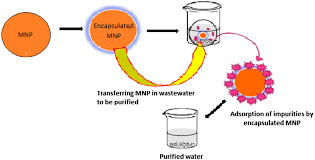
Engineered magnetic oxides nanoparticles as efficient sorbents for wastewater remediation: a review
The rapid urbanization and industrialization is causing worldwide water pollution, calling for advanced cleaning methods. For instance, pollutant adsorption on magnetic oxides is efficient and very practical due to the easy separation from solutions by an magnetic field. Here we review the synthesis and performance of magnetic oxides such as iron oxides, spinel ferrites, and perovskite oxides for water remediation. We present structural, optical, and magnetic properties. Magnetic oxides are also promising photocatalysts for the degradation of organic pollutants. Antimicrobial activities and
Switched active control synchronization of three fractional order chaotic systems
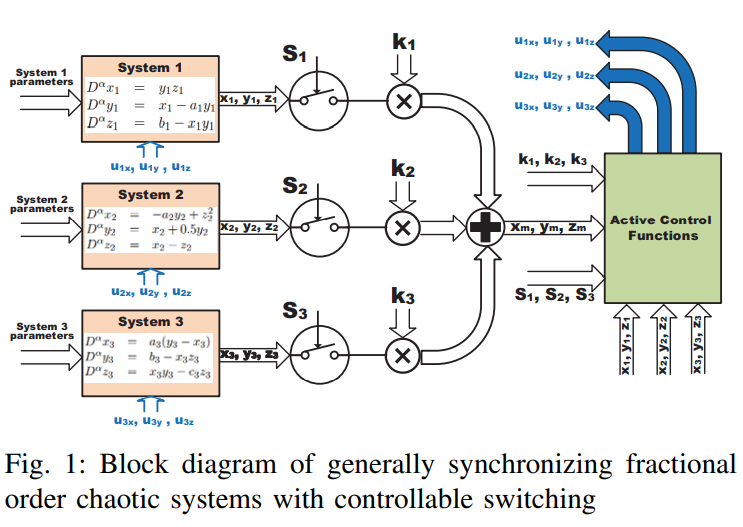
This paper discusses the continuous effect of fractional order parameter on two chaotic systems. Switched synchronization of three different fractional order chaotic systems is presented as an extension for synchronizing two different systems using active control. The proposed technique, which is based on the switching parameters and the scaling factors that control the choices of master and slave systems, is explained. The NonStandard Finite Difference method is used for the numerical solution of the fractional order master and slave systems. Four cases and many numeric simulations are
Distributed admission and power control for cognitive radios in spectrum underlay networks
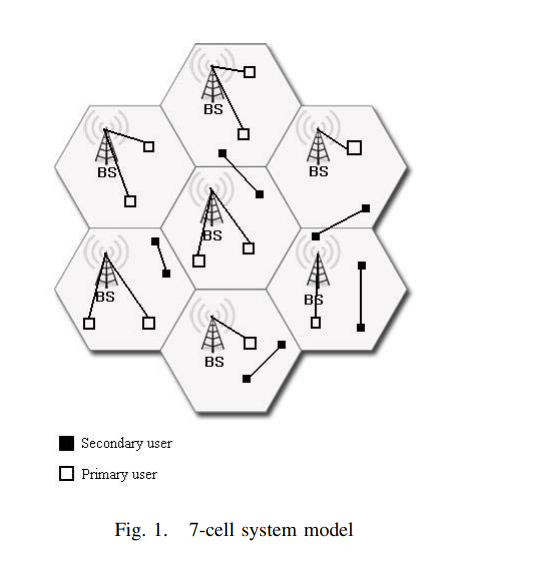
In this paper we investigate admission control and power allocation for cognitive radios in an underlay network. We consider the problem of maximizing the number of supported secondary links under their minimum QoS requirements without violating the maximum tolerable interference on primary receivers in a cellular network. An optimal solution to our problem is shown in previous works to be NP-hard. We propose an efficient distributed algorithm with reasonable complexity that provides results close to the optimum solution without requiring neither a large amount of signaling nor a wide range of