
Numerical solution to a 2D-problem of piezo-thermoelasticity in a quarter-space within the dual-phase-lag model
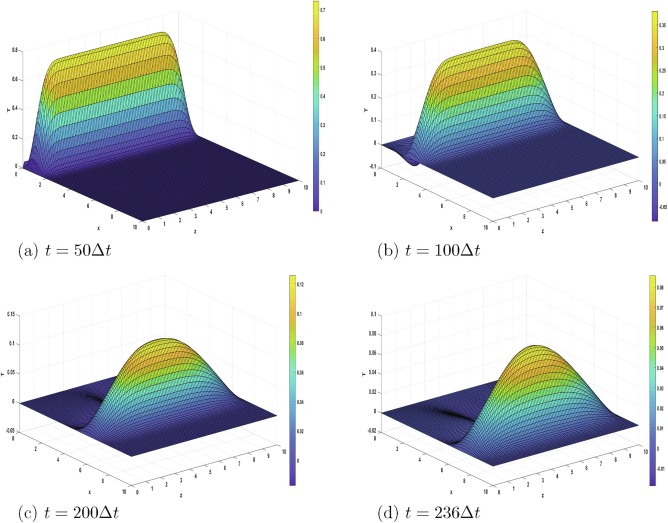
We present a numerical solution by finite differences to a linear, plane, initial-boundary-value problem of thermo-piezoelasticity in a quarter-space, within the dual-phase-lag model. Motion is excited by a one-period heat regime applied to one boundary of the medium. The relation between the two relaxation times is clarified in order to obtain wave-like solutions. An explicit, three-level numerical scheme is proposed to solve the problem under concrete initial and boundary conditions. The obtained results are discussed and three-dimensional plots of the unknown functions are presented. They
Wastewater Treatment Model with Smart Irrigation Utilizing PID Control
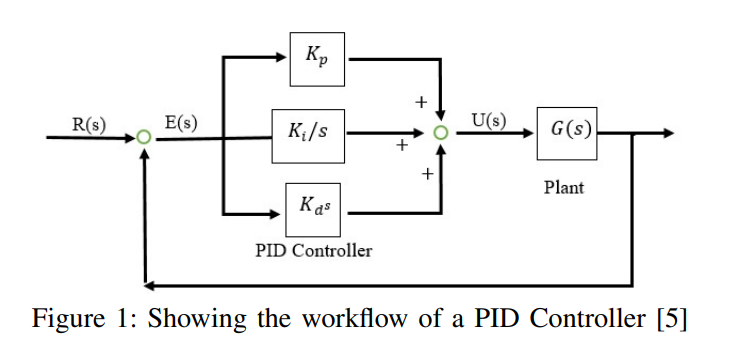
In this paper the activated sludge wastewater treatment process is modeled mathematically and explored. In addition, irrigation was recommended as a valid application for the reuse of wastewater. Other wastewater treatment processes (WWTP) were compared to the one chosen to justify the choice and a detailed expiation of the general wastewater treatment process was provided. Furthermore, PI, and PID controller were developed to further improve the performance of the activated sludge process. The controllers were devolved and tuned using MATLAB, and SIMULINK, and had a positive correlation on
Thermoelastic wave propagation in a piezoelectric layered half-space within the dual-phase-lag model
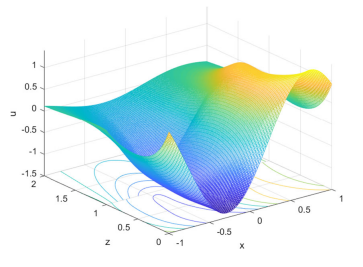
We investigate linear, thermoelastic wave propagation in a layered piezoelectric material composed of a slab bonded to a half-space substrate of a dissimilar material, within dual-phase-lag model and under thermomechanical loads. One of the aims of the present work is to formulate a set of boundary conditions that is compatible with the field equations. Normal mode technique is used to obtain a solution to the considered problem. The model allows for a jump in temperature at the interface, and this can be used to evaluate a material constant of the slab. It turns out, particularly, that a

Magnetic field effect on piezo-thermoelastic wave propagation in a half-space within dual-phase-lag
The current work is concerned with the study of wave propagation in a half-space of a piezo-thermoelastic material under a bias tangential magnetic field within dual-phase-lag (DPL). This is relevant to the design and performance of piezoelectric devices working under a bias magnetic field, for example, the DC magnetic field piezoelectric sensors widely used in various areas of technology. The characteristic time for the problem under consideration is in the range of picoseconds, which is comparable to the thermal relaxation times in many metals. Exact analytic expressions for the mechanical
3PCNNB-Net: Three Parallel CNN Branches for Breast Cancer Classification Through Histopathological Images
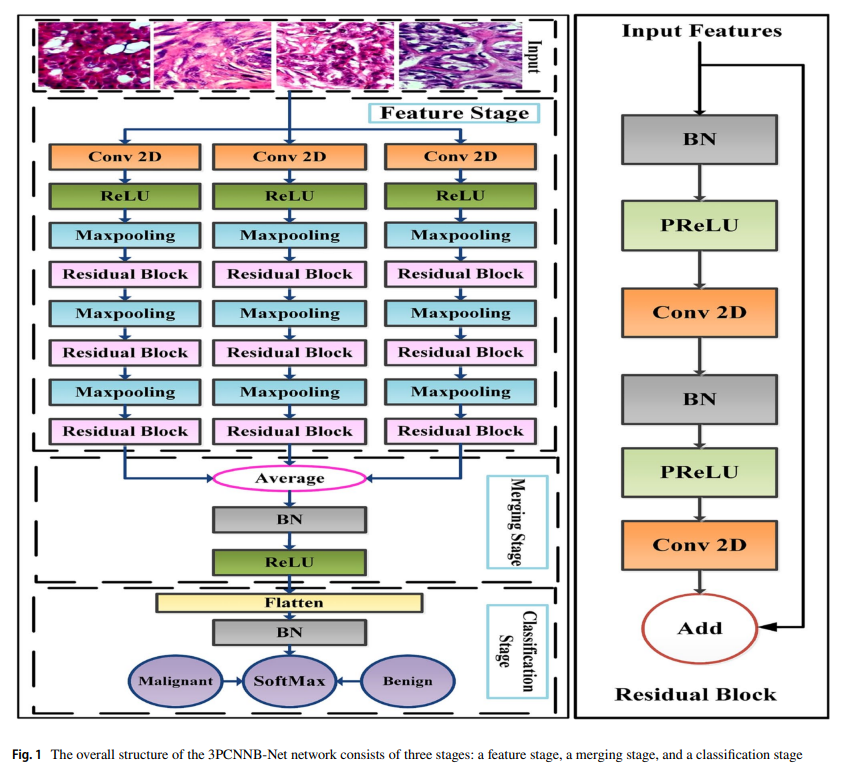
Purpose: Diagnosis of breast tumors using histopathological imaging is considered a difficult task. Oncologists may have different opinions on how to use this imaging technique to diagnose tumors. This technique requires classification experience owing to the contrasting appearance caused by tissue preparation, staining processes, and disease heterogeneity. Cancerous breast tissues are classified into malignant and benign tumors according to cell diversity and density. Computer-aided diagnosis (CAD) helps oncologists improve breast tumor diagnosis efficiently and accurately while saving time
Review organic solar cells parameters extraction and characterization techniques
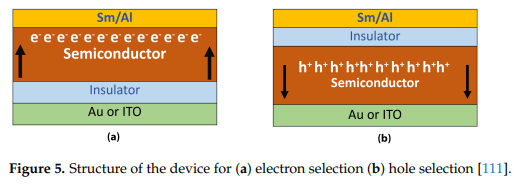
Organic photovoltaic research is continuing in order to improve the efficiency and stability of the products. Organic devices have recently demonstrated excellent efficiency, bringing them closer to the market. Understanding the relationship between the microscopic parameters of the device and the conditions under which it is prepared and operated is essential for improving performance at the device level. This review paper emphasizes the importance of the parameter extraction stage for organic solar cell investigations by offering various device models and extraction methodologies. In order
α -order universal filter realization based on single input multi-output differential voltage current conveyor
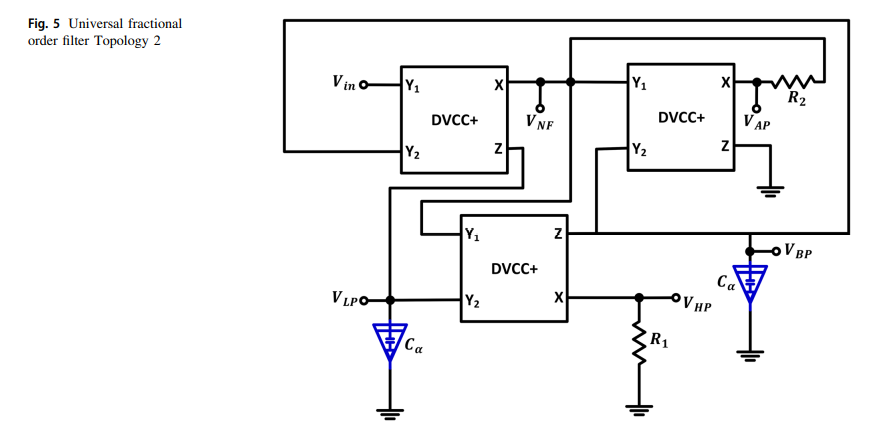
Two voltage-mode topologies single input multi-output universal fractional filters with high input impedance are proposed. The proposed analog filters consist of three DVCC+ blocks, two grounded capacitors and two resistors targeting the minimum passive elements. The proposed topologies provide a realization for all standard fractional filter functions (HP, LP, BP, AP and notch filter). The effect of Fractional order on filter responses in the range of α from 0.7 to 1.2 was studied. Fractional order has been investigated for different filter responses in terms of cutoff, gain, phase and noise
Optimal fractional-order PI with DC-DC converter and PV system
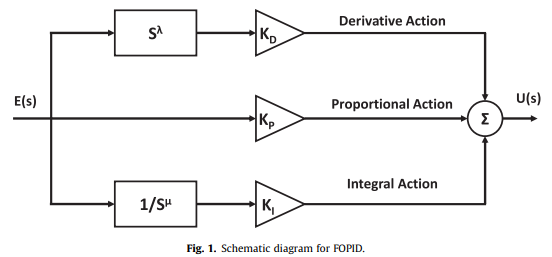
This paper presents a design and analysis for the PV system with a DC-DC boost converter controlled by the Fractional Order PI controller (FOPI). The study includes obtaining the optimal parameters for the PV model and the operating parameters for the FOPI controller. The first part's objective function is to search a five-parameter model based on the data-sheet given by commercial PV modules for a single-diode (SD) model. In the second part of the study, a detailed comparison is executed versus P, PI, PID, and FOPI controllers showing the effect of implementing Fractional order controllers on
Power tracking controller design for photo-voltaic systems based on particle swarm optimization technique
Solar energy turns into a promising supply of electricity, so structures of Photo-voltaic (PV) regularly use a maximum power point tracking (MPPT) way to deliver the highest probable power to the load continuously. This paper presents the methodology of PI controller tuning of PV employing Particle Swarm Optimization (PSO). The aim is to obtain the maximum power and maintain its value using the PI controller. It is employed to trace this highest power point value. © 2019 IEEE.
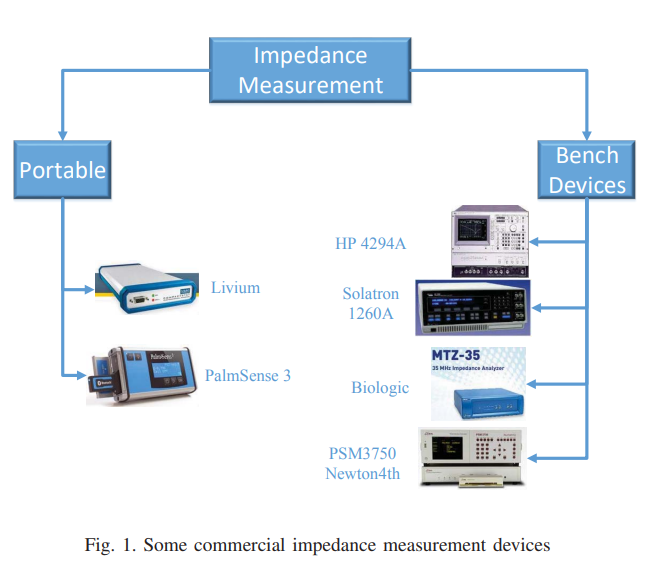
Toward Portable Bio-impedance devices
Bio-impedance measurement has been used as an indicator for specific physical and chemical changes in food products, fruits and vegetables, cancer detection and other applications. In this paper, a portable wireless bio-impedance measurement embedded system, based on the AD5933 chip, is introduced. The system is calibrated using a parallel RC network and the industry standard electrochemical station BioLogic SP-150. The module can be used in many impedance measuring applications. © 2019 IEEE.