
Fractional-order Memristor Emulator with Multiple Pinched Points
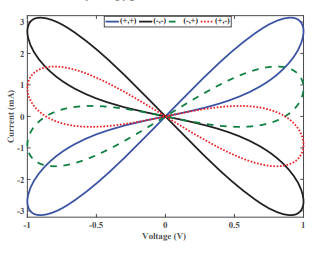
The paper proposes voltage-controlled first-and second-order memristor emulators. The emulators are designed using an operational-transconductance amplifier (OTA) and voltage multiplier blocks plus a fractional-order capacitor. The presented second-order emulator provides two pinched points controlled by order of the employed fractional-order capacitor. Numerical and PSPICE simulation results using AD844 and AD633 are introduced for different cases to validate the theoretical findings. The experimental verification is presented, showing the design flexibility and controllability based on the
Generalized α+β-order Filter Based on Single CCII
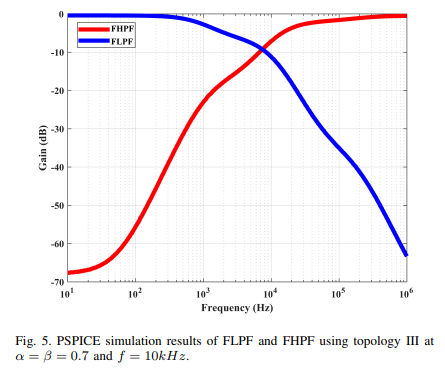
Different generalized filters topologies are proposed in the fractional-order domain. Three voltage-mode topologies and one current-mode topology are used to realize several types of fractional-order filters by applying different admittances combinations. The proposed topologies are designed using a single second-generation current conveyor (CCII-) and two fractional-order capacitors, which add more degrees of freedom for the design. The generalized Fractional Transfer Function (FTF) for each proposed topology is investigated where the fractional-order low-pass, band-pass, high-pass, and notch
Generation of the chaotic keys on the fly for AES encryption system
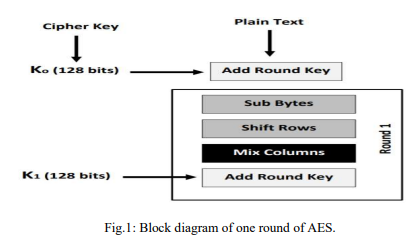
This paper proposes a safe and effective method to generate the subkeys that are used in the Advanced Encryption Standard (AES) algorithm for data encryption applications. The suggested method relies upon the Pseudo-Random Number Generator (PRNG) that is created from the improved Lorenz chaotic system. The output of PRNG is exploited as a key schedule for generating AES subkeys where the output is characterized by having an infinite periodic length. This method can be used in high-speed applications since no hardware multipliers are utilized so it gives the best hardware performance
Design and FPGA Verification of Custom-Shaped Chaotic Attractors Using Rotation, Offset Boosting and Amplitude Control
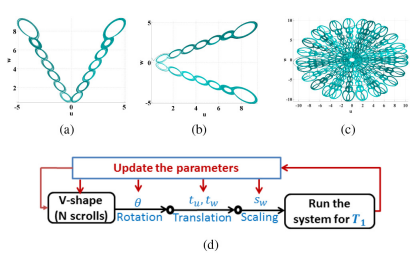
This brief proposes a method of generating custom-shaped attractors, which depends on a planarly rotating V-shape multi-scroll chaotic system with offset boosting and amplitude control, and its FPGA verification. The proposed planarly rotating, translational (offset boostable), and scalable (amplitude controllable) system exhibits a wide basin of attraction and can cover the whole space. Consequently, non-autonomous parameters enable generating attractors of custom-shapes, e.g., letters of the English alphabet as a demonstrating example. Furthermore, non-autonomous parameters are employed to
Online teaching at Egyptian private universities during COVID 19: Lessons learned
The aim of this empirical article is identifying and showing the key challenges and core problems faced by private universities with international affiliation, located in west Cairo, when applying online educational learning in the context of COVID-19. As well, it aims to assist in assembling the lessons learned to maximize the learning impact. a mixed-methods approach was used and it included: (1) observations complemented with five in-depth interviews with experienced faculty members and decision-makers (2) followed by a survey to comprehend the drivers of students’ satisfaction concerning
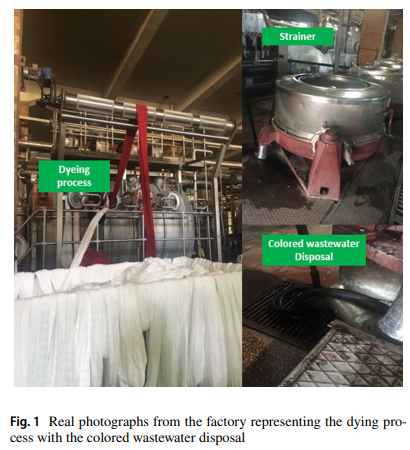
Sustainable Evaluation of Using Nano Zero-Valent Iron and Activated Carbon for Real Textile Effluent Remediation
In this study, the performance of using two different adsorbents, nano-zero-valent iron (nZVI) and activated carbon (AC), was examined for the treatment of real textile effluents. The porous structure and chemical composition of the synthesized nZVI were detected via X-ray diffraction, scanning electron microscopy and EDX analysis. Batch adsorption studies were conducted to investigate the optimal operating conditions including pH, adsorbent dose, contact time and stirring rate for the removal of COD, TSS and color from real textile wastewater. At same optimal operating conditions, pH 6, dose
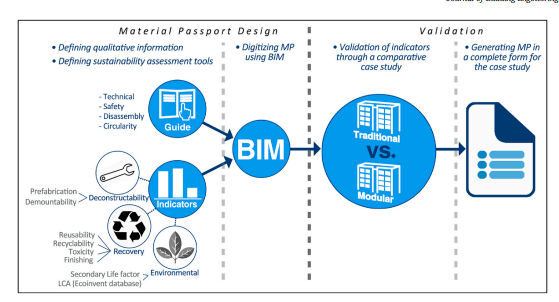
Digitizing material passport for sustainable construction projects using BIM
Several aspects hinder the application sustainability in construction industry. The most prominent problems are related to the conservation of natural resources and the generation of construction and demolition wastes. Previous studies indicated that these problems are due to lack of information available to construction projects stakeholders on the proper handling of building materials in their different lifecycle stages. This paper presents Material Passport (MP) tool that provides information on how to handle building materials at the construction stage and how to benefit from them at their
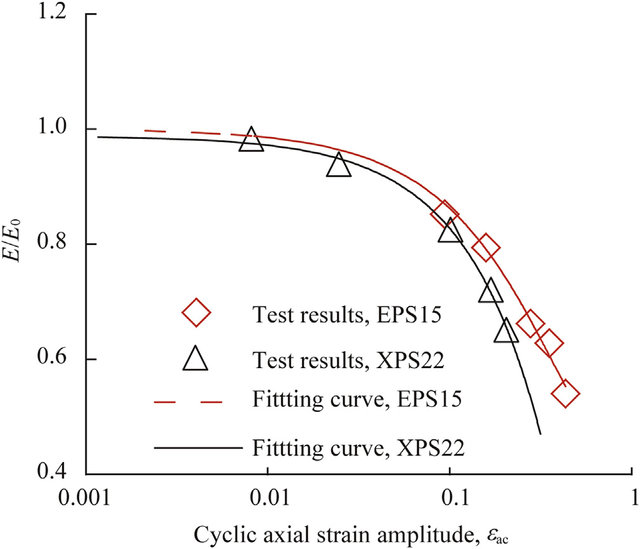
Ultrasonic characterization of expanded polystyrene used for shallow tunnels under seismic excitation
Expanded Polystyrene (EPS) is used as an inclusion to mitigate stresses acting on tunnels. In this study, the efficiency of utilizing EPS in reducing dynamic loads acting on shallow tunnels was studied. To gauge this, dynamic modulus of elasticity (Ed) and shear modulus (G) of EPS with densities equal to 25, 30, and 35 kg/m3 were characterized based on series of ultrasonic tests, where Ed ranged from 3500 to 6578 kPa, and G ranged from 1535 to 2741 kPa. A correlation was developed between EPS density and damping coefficient, which ranged from 1% to 2.3% based on G and the ultrasonic wave decay
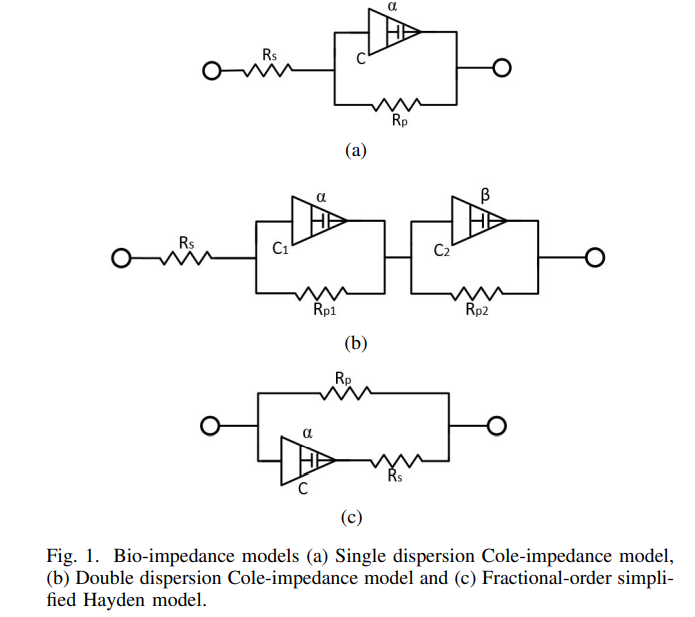
Do the Bio-impedance Models Exhibit Pinched Hysteresis?
Recently, pinched hysteresis has been found in the electrical modelling of regular plant tissues. Usually, the biological tissues are characterized in the frequency domain using bio-impedance analyzers without investigating the time domain, which would show the pinched hysteresis. In this paper, the current-voltage analysis of some of the widely known electrical bio-impedance models is studied. The investigated models are the single dispersion Cole-impedance model, the double dispersion Cole-impedance model and the fractional-order simplified Hayden model to prove that these models can not
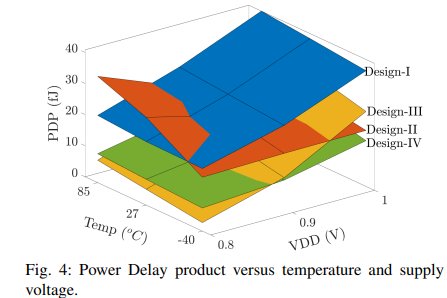
Comparative Study of CNTFET Implementations of 1-trit Multiplier
Ternary logic has become a promising alternative to traditional binary logic due to low power consumption and reduced circuits such as interconnects and chip areas. The efficiency of the multiplier circuit can be much better using a ternary logic system. Carbon nanotube field-effect transistor (CNTFET) is a promising technology as it achieves more advantages than MOSFET due to its low off-current features such as low power and high performance. This paper presents a comparative study of four implementations of a 1-trit multiplier based on CNTFET technology. The comparison is performed in terms